It rained yesterday! To my eastern states or overseas readers, that might sound silly, but it’s the first serious rain (more than just a ten second sprinkle) in three months. This has been a record hot dry summer in Western Australia. This is global heating at work, folks.
It’s particularly serious here in WA as we’ve lost around 20% of our annual rainfall on a permanenet basis, since 1977. I can remember noticing that year and how dry the summer was. We used to have adequate dams, which filled reliably every winter, for our water needs. No more. Most of our dams are only 30-50% full and have no hope of suppllying the needs of a city of 2 million people who need to pour water on lawns and gardens.
Our main water supply comes from underground now, but even that’s becoming depleted as it’s not being replenished by the low rainfall. It’s very much supplemented by hugely expensive seawater desalination plants. We have two already and a third is being built now, just up the highway from me, actually.
Anyway, back to more interesting stuff. Cameras!
_______________________________________________________
After the Pentax departed, I thought I’d found my forever camera, the Minolta XD7.
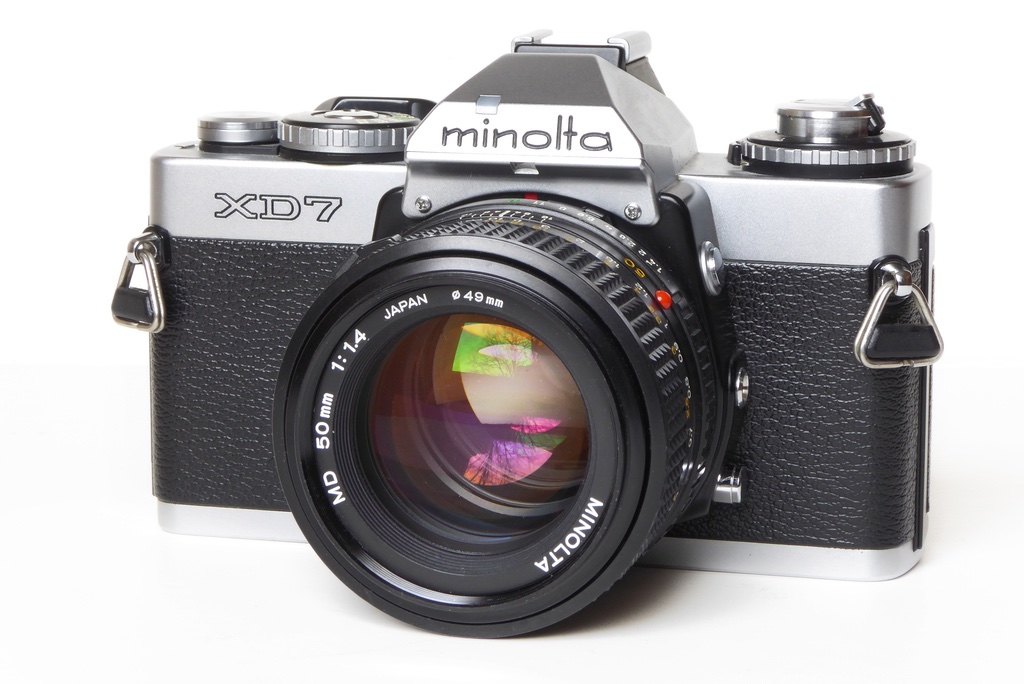
Wow, I thought I’d hit the jackpot. I loved the looks, I loved the feel, I loved the multi-mode operation. It was an aperture priority/shutter priority/program/manual camera, all the things I liked. I can’t remember how I got it – I think I bought it new on one of my many trips to Singapore in the late ’70s.
I started a small collection of lenses, the 50mm standard lens, a Rokkor (Minolta’s brand) 35mm which I still have, a Rokkor 100mm (which I didn’t like and sold to a guy at work). And most especially, the beautiful Minolta RF Rokkor 250mm f5.6 mirror lens, which I still have right here.
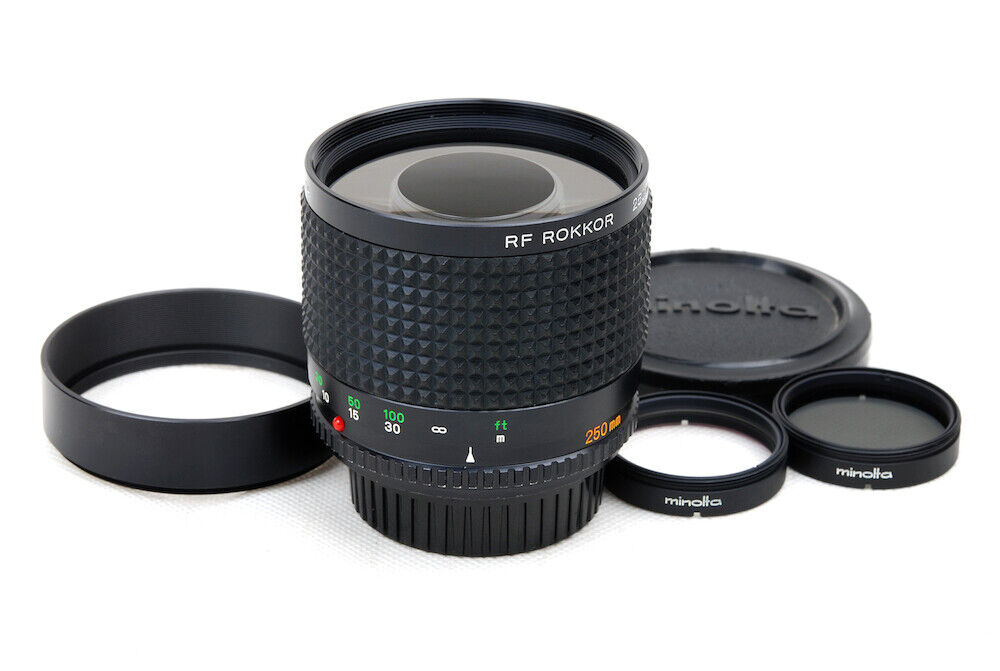
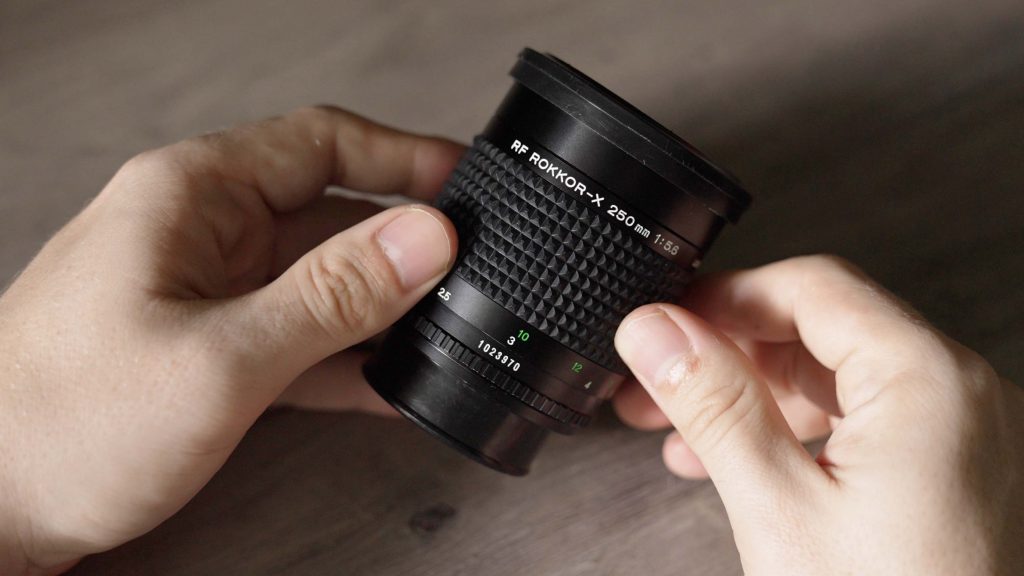
The thing about this lens is that it was so small and light that I thought I could hand-hold it without camera shake. But I couldn’t. It was deceptive. I don’t think I ever got a sharp image hand holding it. Even so, I loved using it. Mirror lenses were a big thing in the ”80s and I also owned a Tokina 500mm f8 mirror lens. That was a heavy lens and the weight actually assisted hand-holding. More on that later.
I hold onto the Rokkor 250mm lens these days because things have changed. You can get lens mount adapters now and I’ve got an adapter from Minolta to my Olympus OM-D E-M1 Digital Micro-4/3 camera. This doubles the focal length to 500mm, but crucially, gives me excellent, amazingly good image stabilisation, meaning I can hand hold to my heart’s conntent. And it’s digital!
I also bought a second hand Minolta XE-1:

And I also bought my heart’s desire, a Minolta XM. This was Minolta’s attempt to get the professionals to buy into the Minolta system, (but it was never successful). It’s built as if you could use it to hammer nails.
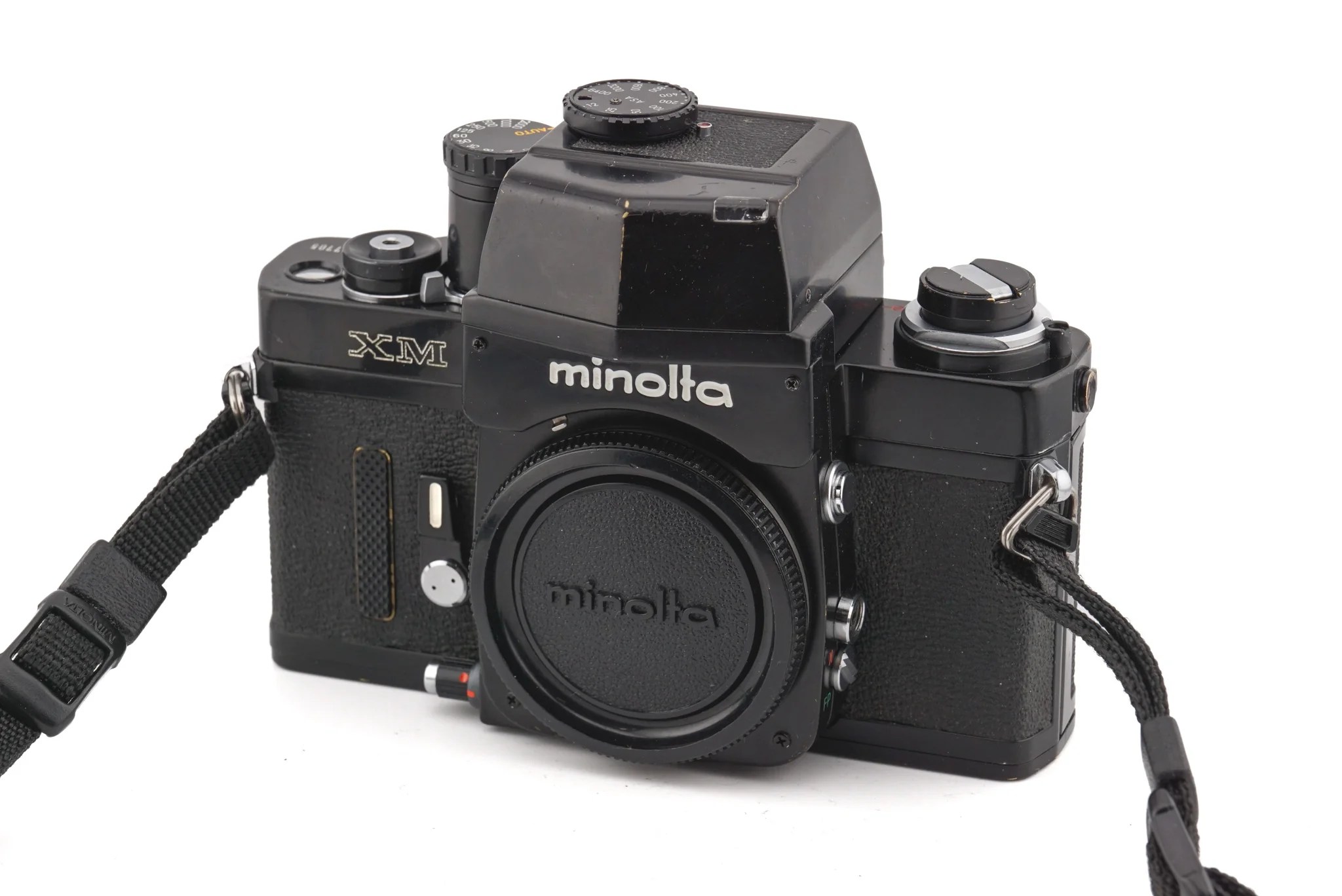
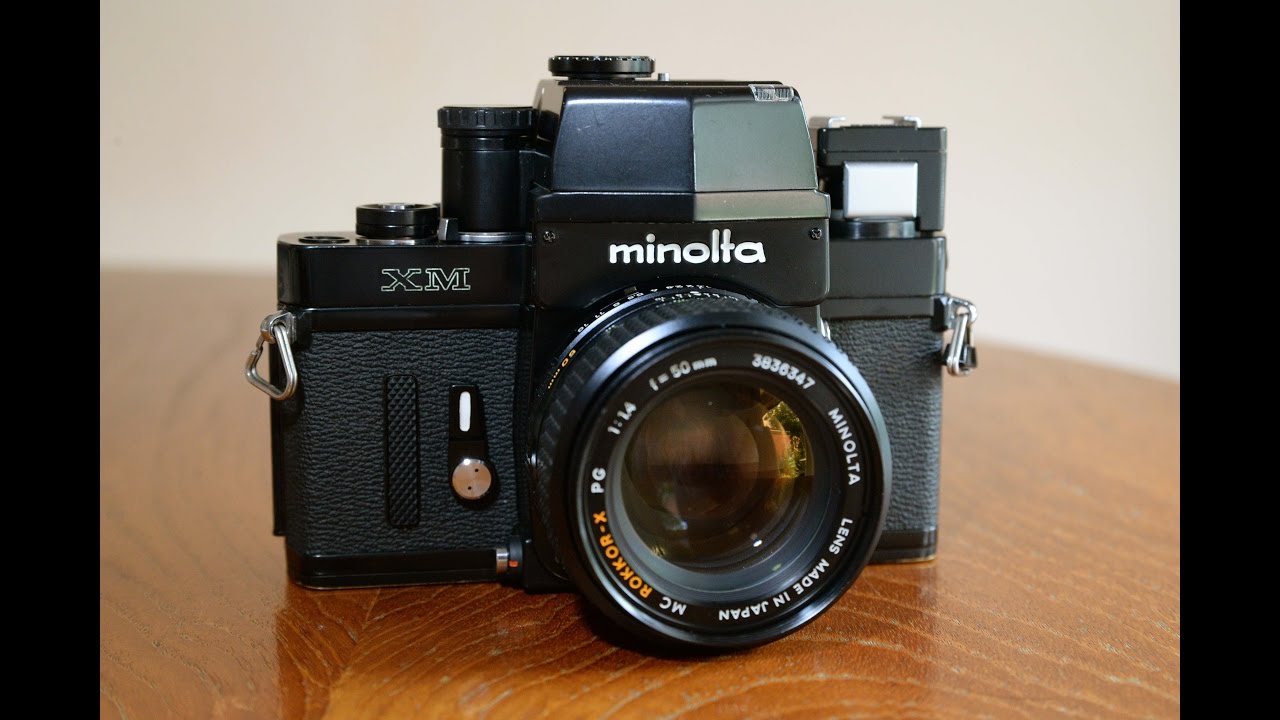
I still have it! It’s big, it’s heavy but it’s beautiful. Titanium shutter curtains. Interchangeable (removable) prisms. Interchangeable focusing screens. I’ve still got this camera. When I initially bought it, mine had a plain prism, i.e. no light metering. No problem, I used a hand held meter. But I spent literally years looking for a full metering prism as shown above, and finally I found one, second hand, of course, in the camera shop in Forest Place in Perth (before Myer was built, demolishing that whole block of shops). It cost me $150 for the prism but I was rapt! I’ve still got it, and I thought this camera would appreciate in price, as it was always a prestigious camera. Unfortunately, it’s depreciated badly and is only worth about $100 now, the whole thing! However, I still have the 35mm and the 250mm lenses, so I can still play around with it. But film has become so expensive and so inconvenient that I would never bother with it now. Pride of ownership only.
So I had quite a big Minolta system in about 1978 or so. Why did I switch away? Shutter shock in the XD7. That’s when the action of the shutter mechanism in the camera induces camera shake, and that’s what I was discovering. My images weren’t sharp. I can’t exactly remember what I did with the whole system – probably sold it to a guy at work.
______________________________________________________
I left off at the Pentax Super A. I was very fond of that camera, so why did I go away from it? Two reasons, (a) a friend wanted to buy it; and (b) I lusted after an Olympus OM camera. It was mainly for the Olympus OM system of macro and flash stuff. It was by far the best in those days, the 1980s. So I sold the Pentax and Minolta and bought an Olympus OM2 Spot Program (OM2 SP), which I still have, although it’s not the same one. More on that later. It’s still got a film in it, too, awaiting me finishing the roll and taking it for processing!
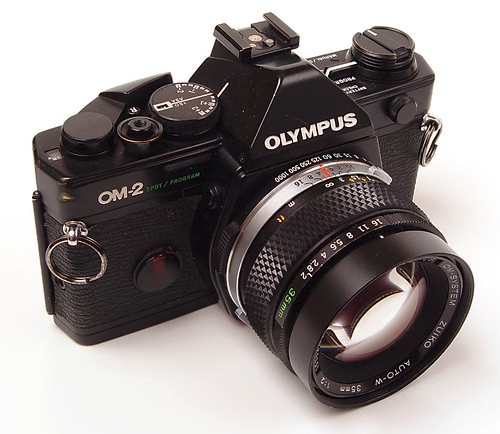
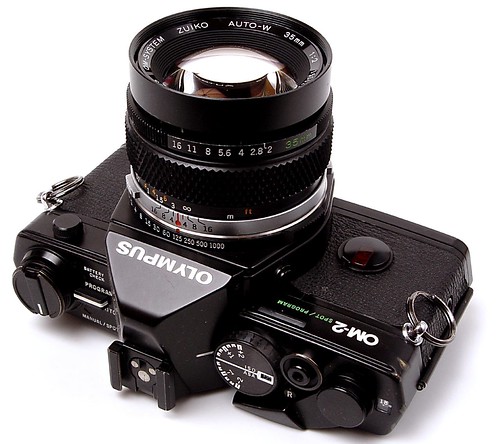
I should add that this was a time when duty free (tax free for overseas travellers) cameras were quite low priced in Australia for some reason (strong Australian dollar, tax 33.3% I suppose) and I only paid about $145 for this camera, brand new. I was rapt!
I quite soon started to build a system and I was finding used Olympus equipment in the thriving second hand windows of shops in Perth. I soon found 18mm, 21mm, 28mm, the 50mm that came with the body, and 135mm genuine Zuiko lenses. In addition, I bought a Sigma 50 – 200mm APO zoom in Singapore. (APO means apochromatic – corrected for all colours to produce fringing-free, sharper images).
Then it was into the macro and flash system, and boy, Olympus had the best system of any maker then. I found most of this stuff second hand:
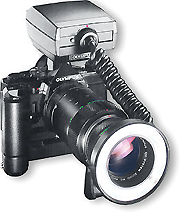

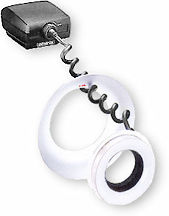

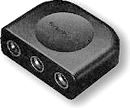

I owned all these and more. In fact, I still have a lot of this flash equipment stored away in a box that I haven’t opened in over a decade. And more:
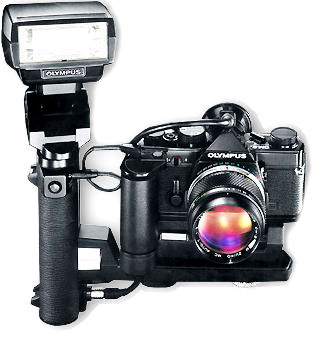

I had all this! I bought most, if not all of it, second hand as there was a lot of it available. I had to get rid of the big flash grip at left because it overheated every time I tried to use it. No matter, I had an equivalent Metz unit and flash. As you may gather, flash was very big back then. It’s not so important now due to the incredible sensitivity of digital sensors. You can shoot at ISO3200 or more now, so you don’t need flash, although it still helps sometimes.
More to come, much more!
 Bull's Roar