Did you think I was finished? Ha, no way, lots to come.
I left off in the last post in the early 1990s just after the burglary that cleaned me out. All my Olympus and Nikon gear was lost. Damned thieves! So I set about rebuilding my system(s).
I had always been a bag man and I had my favourite – it wasn’t anything fancy, just a cheap blue bag, but to me it was the perfect bag, almost. It just had four compartments, with two pockets on the ends. Very light, but most impoertantly, the straps folded right over the top without being attached to the top flap. This meant that you could pick up the bag without it tilting over, one of the things I’ve always looked for.
The drawbacks were (a) it used Velcro for the top closure, and (b) it used metal clips and rings to hold the top closed. Both of these made noise! One thing I didn’t want when stalking birds out on a lake or in the bush was sudden noises, and opening that bag top meant “r-i-i-i-p”, or jingle, jingle, jingle of metal on metal. Still I loved that bag and surprisingly, after a couple of years, I found another one, identical, $20. Done deal!
Surprisingly, before I found the replacement, one day at work I saw a woman photographer working in Studio 1 at Channel 7, and blow me down, she had what looked like my bag. Identical. I was so dumbfounded that I was silly enough to make a comment that it looked like my stolen one. Naturally, she got her back up and emphatically said it was hers and implied that I should go away.
Anyway, I soon bought a Nikon F-601 to replace the F-801.
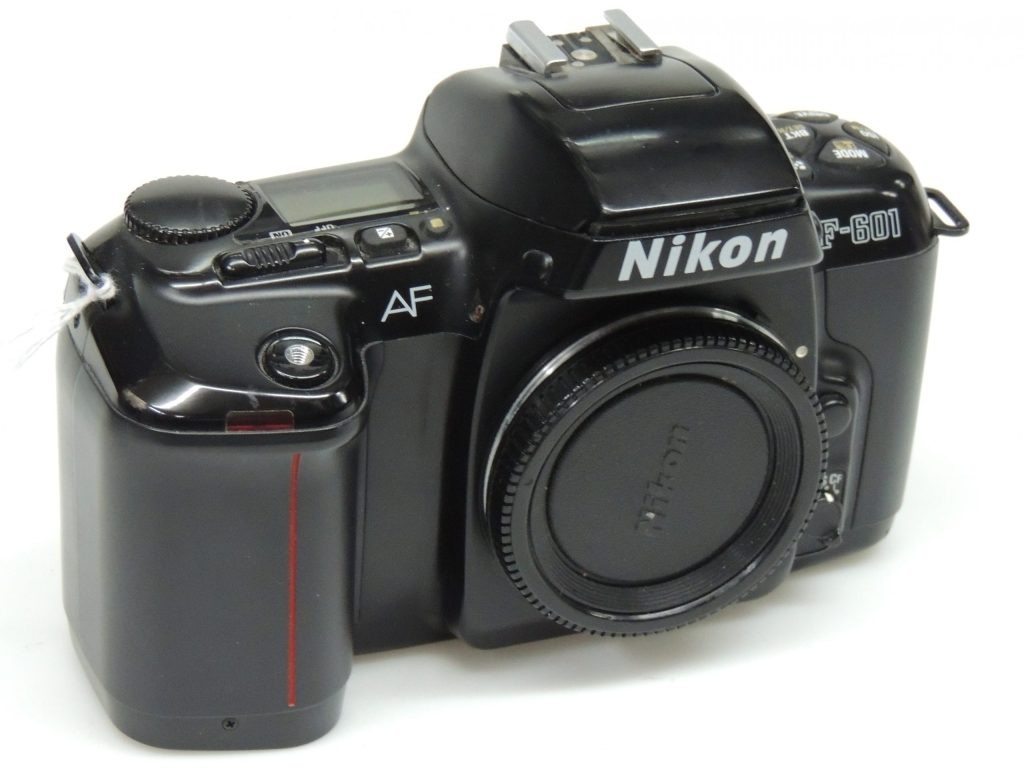
This was a cheaper version of the F-801 with a few nice additions, but a different shutter, nowhere near as nice sounding. It also had a pop-up flash in the prism area, which I liked. I quite liked this camera, but it wasn’t as nice as the F-801. It was all I could afford at the time.
I had the 50mm lens that came with it, and the 28mm Series E. I also found another Nikon Series E 75-150 f4, almost my favourite lens. Very sharp. So I was on my way again, especially as I bought the 300mm f4 IF ED and the new s/hand 200mm Micro Nikkor that I found in Sydney. Wha-hey, I was building a system again.
I also found a s/hand Olympus OM2 SP, so that got me going in Olympus again, nowhere near what I had before, but a start. As I say, I’ve still got that amera, complete with an unfinished roll of Fuji Provia in it. One o’these days I’ll finish it!
_________________________________________________________
Time moved on and I continued to make trips to Singapore, Kuala Lumpur, Fraser’s Hill in Malaysia, and Penang. Fabulous! I loved travelling in those areas.

It’s a bit hard to remember the late 1990s, but in October 1999 I took the offer of a voluntary redundancy from my workplace and retired. At age 52. A good payout saw me never having to work again, except for voluntary part time work at my old job. Ideal!
I remember feeling the absolute freedom to travel, without needing to scrimp and save, being able to stay in four star hotels rather than two or three star. And to buy my heart’s desires in cameras. I didn’t go wild, not at all, just a bit less restricted.
In particular, I had not yet moved to digital. I had a Nikon LS-4000ED film scanner, meaning I cold scan a frame of film to a 4000 x 3000 pixel digital image. I used to say, why do I need a digital camera (when 4-6Mpixel was the state of the art then) when I have a 12Mpixel device to scan my film?
So on a trip to Singapore around 2000 or 2001, I bought a camera I had lusted after, the Contax G2 with its Zeiss 35mm Sonnar lens. Second hand in Singapore.
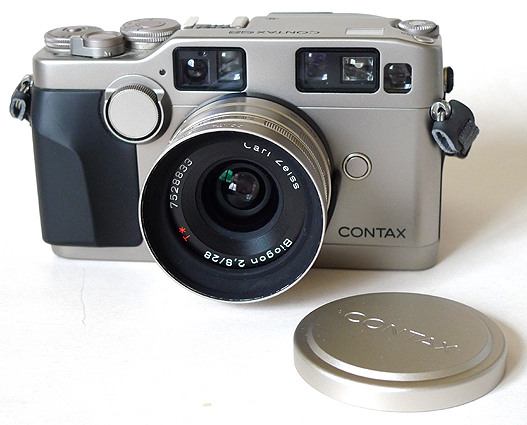
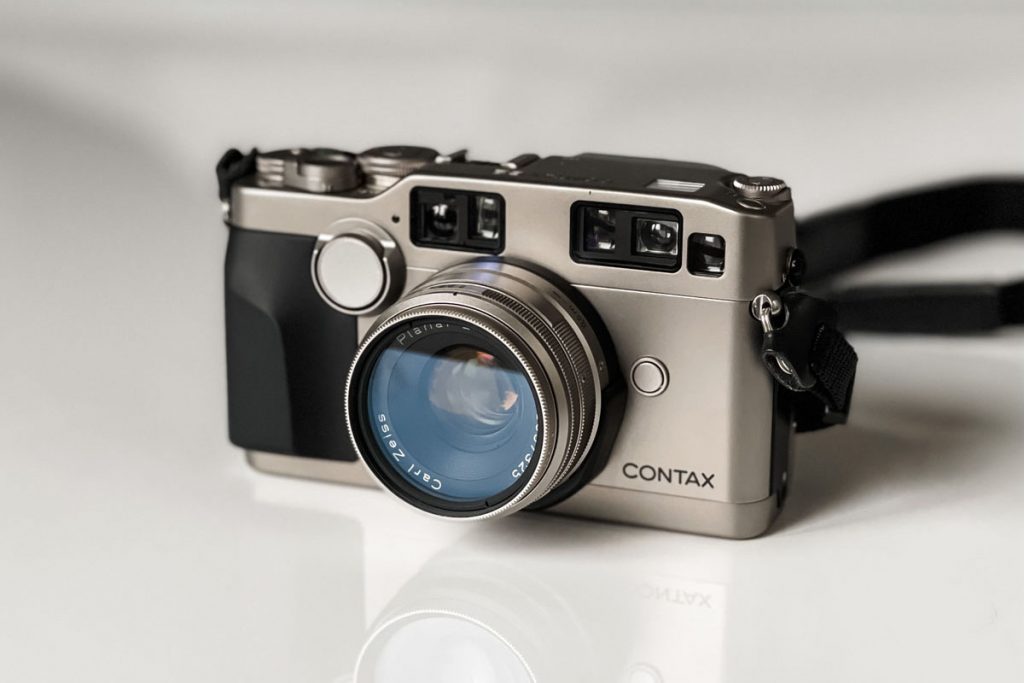
I think it cost me about $800, and the 28mm lens was about $400. It’s a very unusual camera – a rangefinder, but autofocus camera. Titanium body, made in Japan by Kyocera (Yashica) for German Contax. Lens made in Germany.
Of course, that wasn’t enough and on the same trip I bought a s/hand G1 as well, and a 35mm Zeiss lenns, and the 90mm Zeiss as well. And the accessory flash. The G1 was the first model in this new range, succeeded by the G2 obviously.
It turned out that when I tried to use the 35mm on the G1, it wouldn’t work. Can’t remember exactly why but the shop told me there was an official mod needed. Go to the service centre in XXX industrial suburb, they told me. So, taxi there, please wait while it’s done, that’ll be $50 (??) please, and there’s a small green sticker in the film compartment to show it’s done. Taxi back to the hotel.
Wow, was I pleased with this purchase! I had spent about $1500 and I figured it would be worth at least $2,000 in Perth if I got tired of it. So I figured I was pretty safe.
Well, my experience has been terrrible. For one thing, the autofocus requires you to centre a small circle in the centre of the viewfinder on the subject before it will try to focus. This means I don’t think I’ve had a single sharp image in the whole time I’ve owned the cameras! It’s too hard. I’ve seen plenty of beautifully sharp images on the Web, but I can’t get these cameras to do it for me.
So I’ve found a way to adapt the Zeiss lenses to a modern Sony digital camera. More of that anon.
That leads me to my first real digital camera, the Konica Minolta A2.
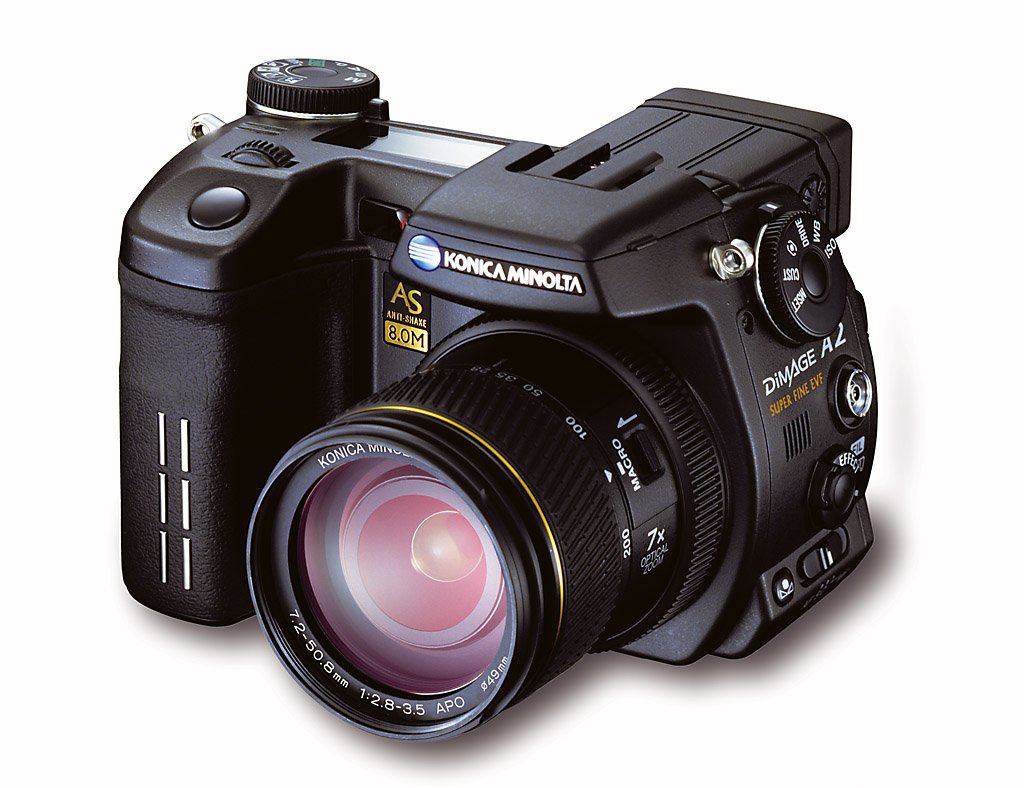
This was a lovely camera and I’ve still got mine. Only 8Mpixels but that seemed enormous in 2004.

This was a fixed lens camera, so there was no buying extra lenses. It was a 28 – 200mm manual zoom, ideal for me. I liked it very much. I bought it at a camera shop at Whitfords City in Perth. I can still remember the frustration of having to wait for the battery to charge before I could use it (about 3-4 hrs), and the remark by someone about “Wow, 8 megapixels!” as that was a lot in those days.
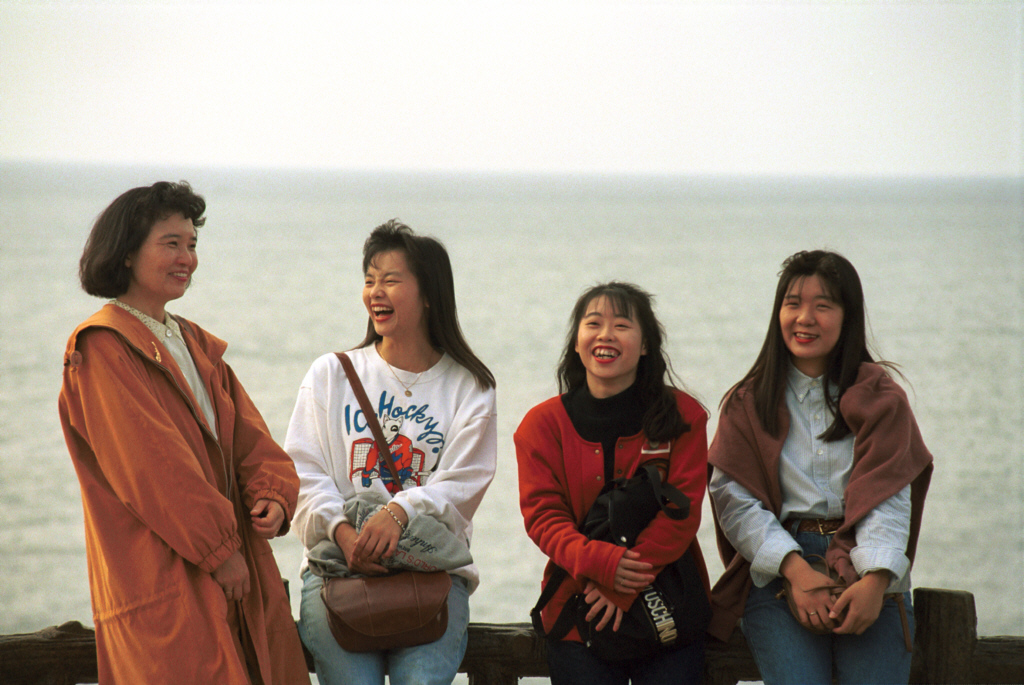
That got me through a long time before I bought my next digital camera. I spent months digitising all my Japan Fuji Reala negatives from my 1992 trip and I loved the results. This was around 2005 I think, in the first few years after I retired, as I had all the time in the world. There were about 350 images.
I’m struggling to remember my next digital camera. I know that I bought an Olympus OM-D E-M1 in about 2014:
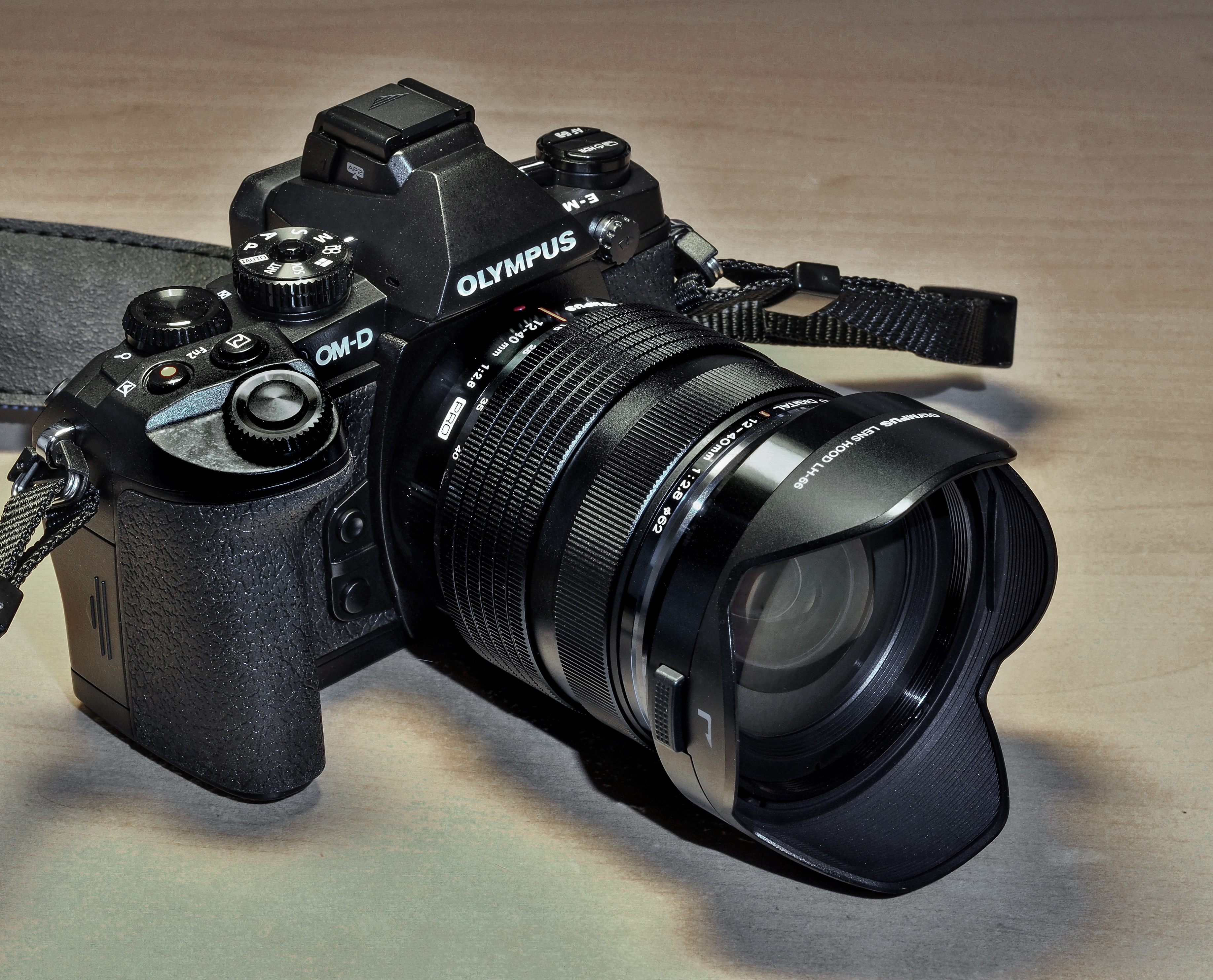
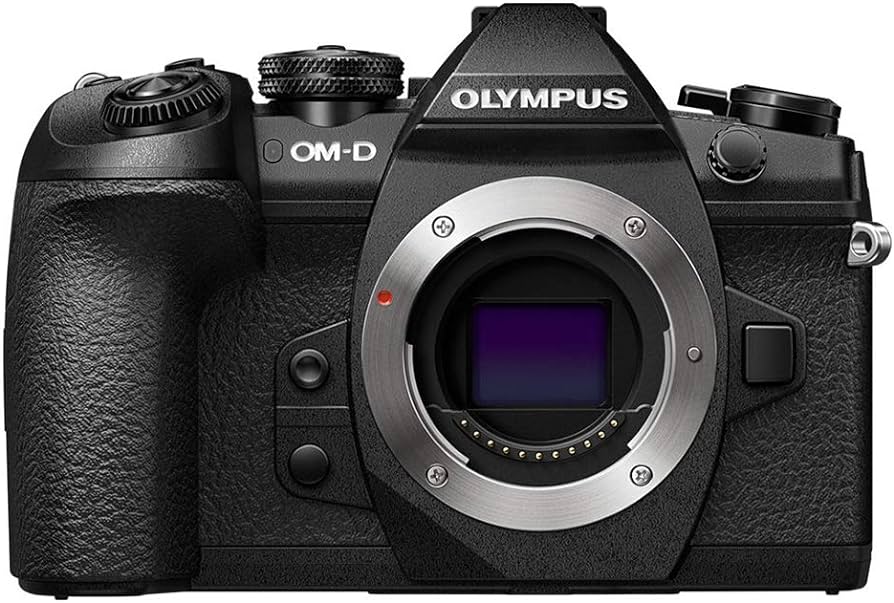
This is a beautiful camera, but boy it’s hard to learn its use. Switches everywhere and complex menus. But the image stabilisation is magic. This was Olympus’s first Micro 4/3 sensor camera. This was a cropped (reduced size) sensor in the 4×3 proportion. It has the huge benefit that there are adapters to allow the use of almost any lens from any maker. I’ve got an adapter to fit the Minolta 250mm mirror lens that I mentioned in part three to this camera, with the benefit of doubling the focal lenght to 500mm with brilliant image stabilisation. I love it!
It came with a 12-24mm “collapsible” zoom lens and a tiny flash, (which I’ve hardly ever used). I’ve since bought an Olympus 75-300mm M. Zuiko, which is equivalent to a 150-600mm in 35mm terms. It’s a lovely sharp lens.
To be continued. Lots more to come!
 Bull's Roar