My life in cameras part 5

___________________________________________________________________

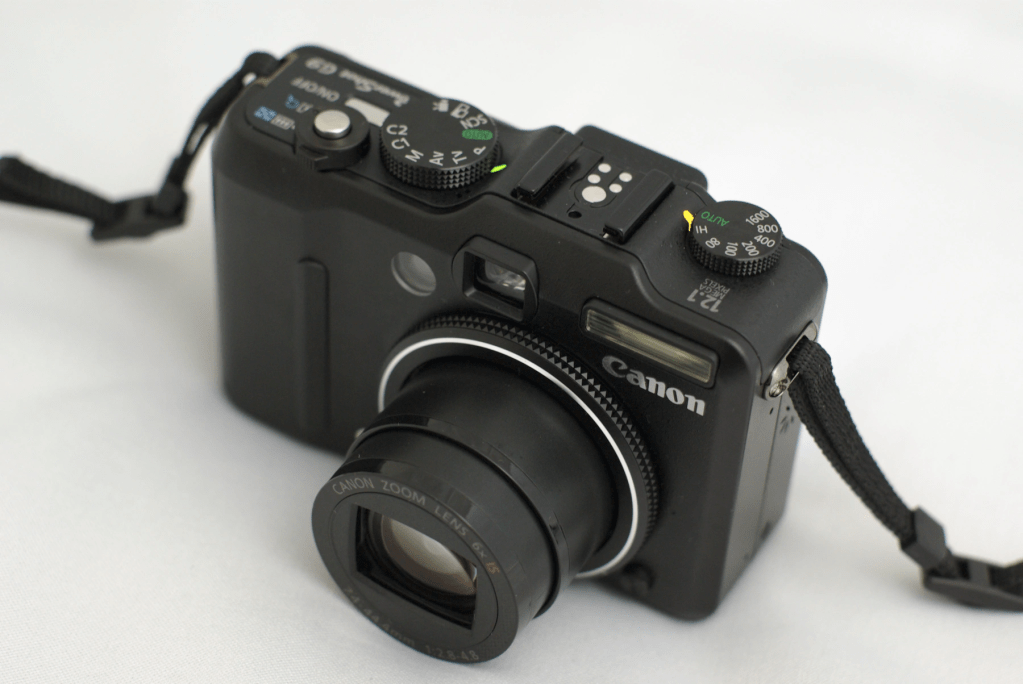
My memory has been failing me slightly. In the 1990s or early 2000s, I bought a Canon G9:
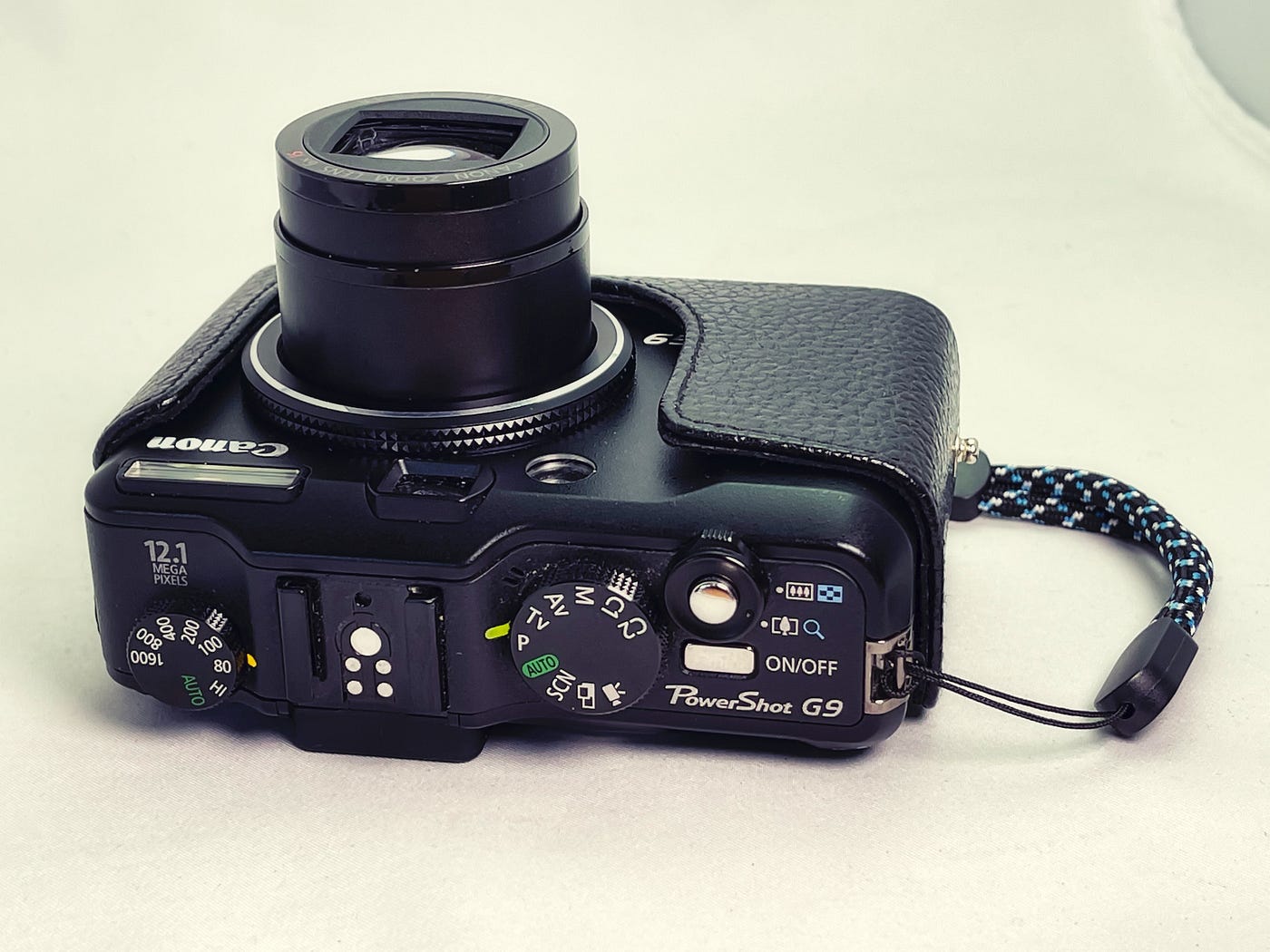
I liked this camera very much and had good results with it:

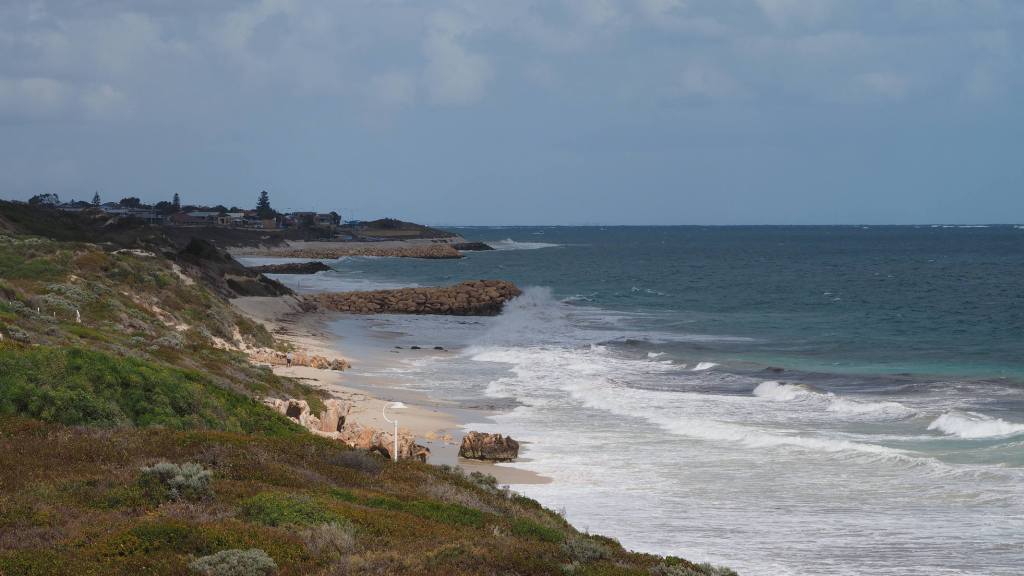
Trigg Bushland Reserve 22 July 2008 © PJ Croft 2024

I kept this camera for a couple of years and then decided to sell it to a mate who liked it. But there’s a very funny story here – he took the camera with him on a camping trip and had the battery out on charge overnight. But he left the battery compartment door open on the table.

Next day he started using the camera again and noticed a shadowy thing in the bottom left corner. It took a while but he eventually worked out that it was a worm! A worm had crawled into the camera sensor chamber through the battery compartment during the night!

So how do you get a worm to come out again? Answer: you can’t. Eventually it stopped moving and died. But it was still visible in the pictures.

He showed it to me and I said I’d have a go at getting it out. After all, we had nothing to lose, as even if I buggered it up, the camera was unusable anyway.

So I dismantled it as much as I could, went as far as I dared, but it was no use, I couldn’t get at it. I tried hard, but I had to call a halt as I just couldn’t see how to get any further in dismantling it or damaging it.

The main thing I remember about this process was the electric shocks I got from the flash capacitor in the camera. Yow! Ouch! I managed to get two shocks a few days apart and I still remember them, ten years later.

________________________________________________________________

Anyway, my next purchase was a Ricoh Caplio GX100. Why? It was getting very good reviews on a web site I trusted.
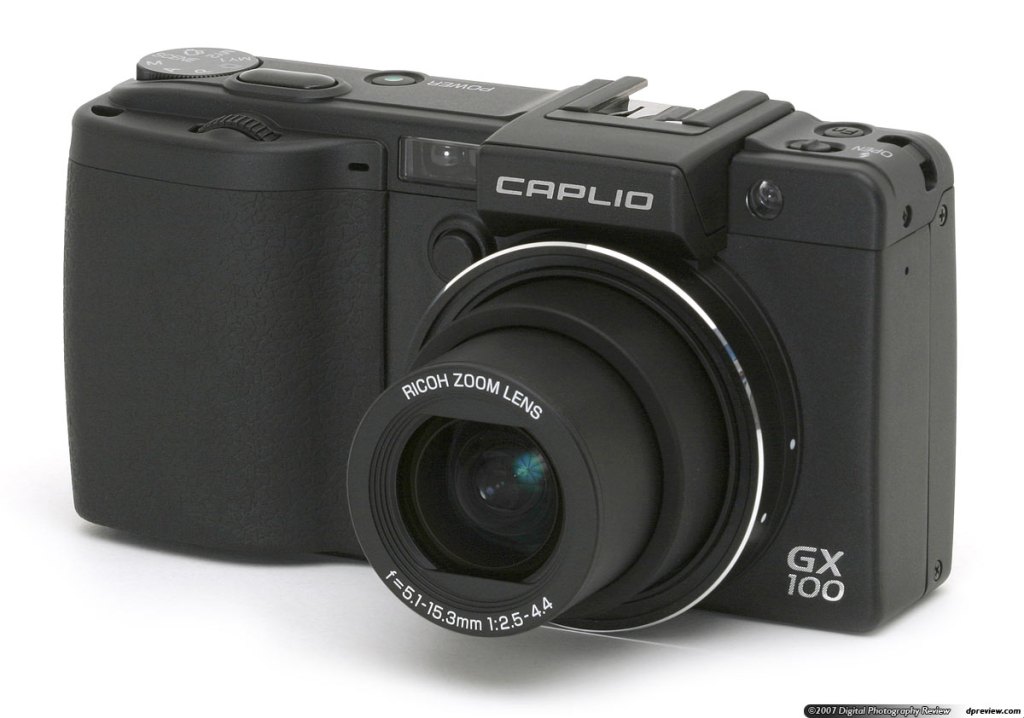
Image: Wikipedia.

This is a very highly regarded pocketable camera, short lens, very high quality, reduced size 10 megapixels sensor, with image stabilisation.
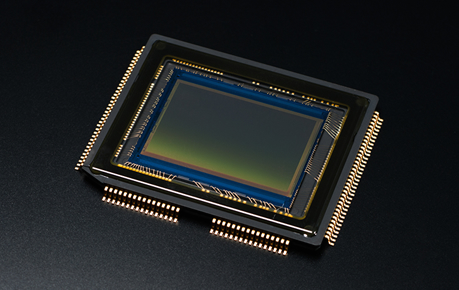
Ricoh image sensor.
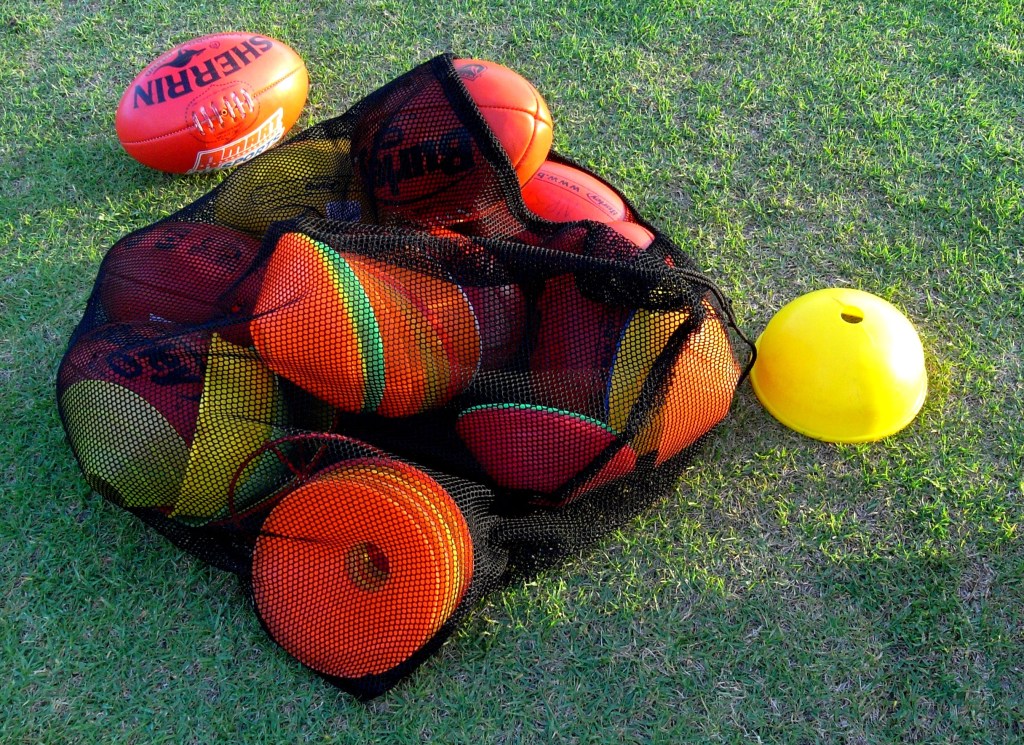
Trigg sports open space, 22 April 2008 © PJ Croft

I don”t remember why but I soon disposed of this camera by donating it to my mate KG at the time. He had done me some favours and I felt an obligation. He used it for a few years but I saw it and it’s in a sorry state. He complained that things didn’t work, but crumbs, it was bashed around. No wonder.

__________________________________________________________________

In the meantime, I’d fallen under the spell of Canon and their Ultrasonic focusing lenses. Wow, near silent AF. I was hooked. In 2007 I bought a Canon 40D SLR in Singapore, with a 28 – 105 US AF lens.

© Wikipedia

I think I also bought a Canon 75-300mm lens at the same time, although I sold that lens on to a friend. He had a burglary and it was stolen from him. Sigh. Meantime, I had bought the Canon 28 – 105mm Ultrasonic in Singapore and found it to be a very nice combination of focal lengths.
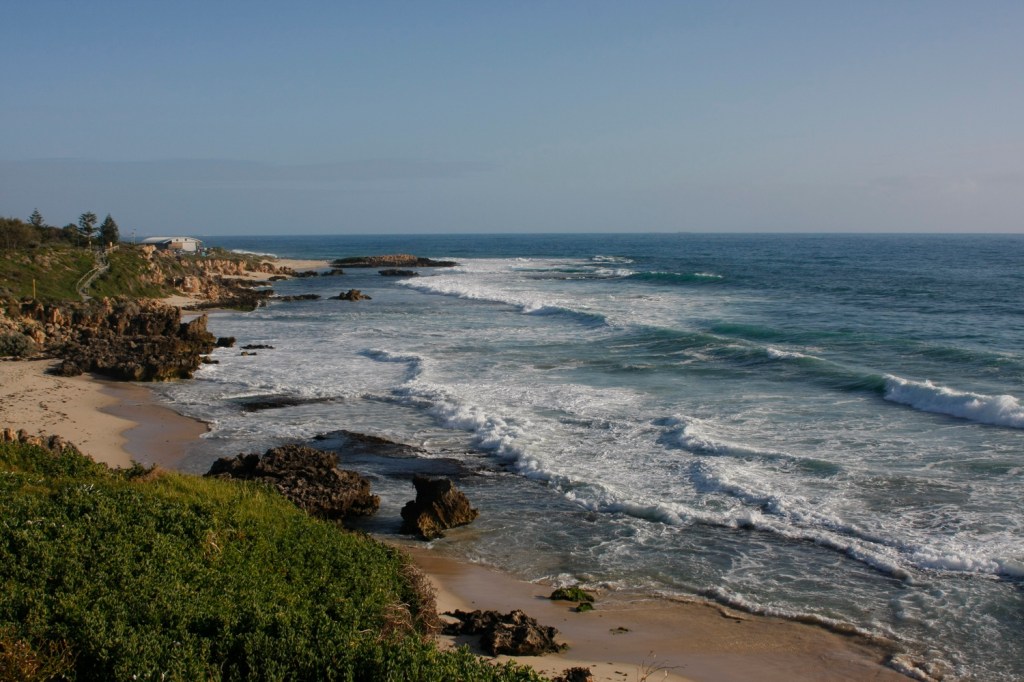
Trigg Beach 9 October 2007 Canon 40D © PJ Croft 2024

But I was planning a trip to the UK via Singapore and Paris, where I knew I would need very wide angles for pics in cathedrals, and so I also bought a Sigma 10 – 20mm super wide angle zoom for it. I was very happy with that lens, and more on that later. I actually sold the Canon one and bought the same lens for Pentax, which I still have. TBC.
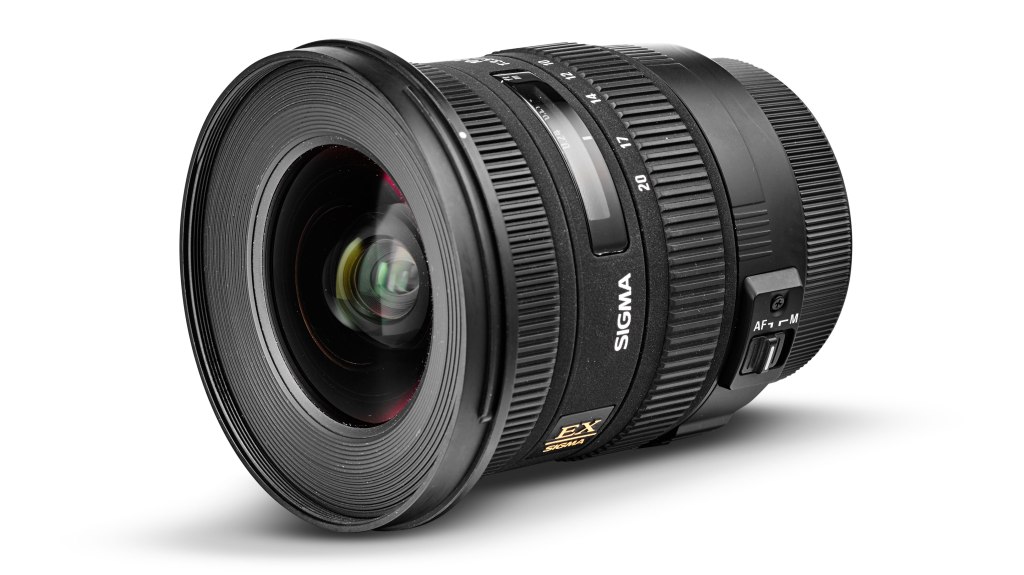
Sigma 10 – 20mm EX DC lens. DC means cropped image circle, for APS-C sensors

__________________________________________________________________

I still wanted another camera for my trip and Fuji brought out a new camera just at the right time. I was hooked. It was the Fujifilm S100fs, where ‘fs’ stood for film simulation.
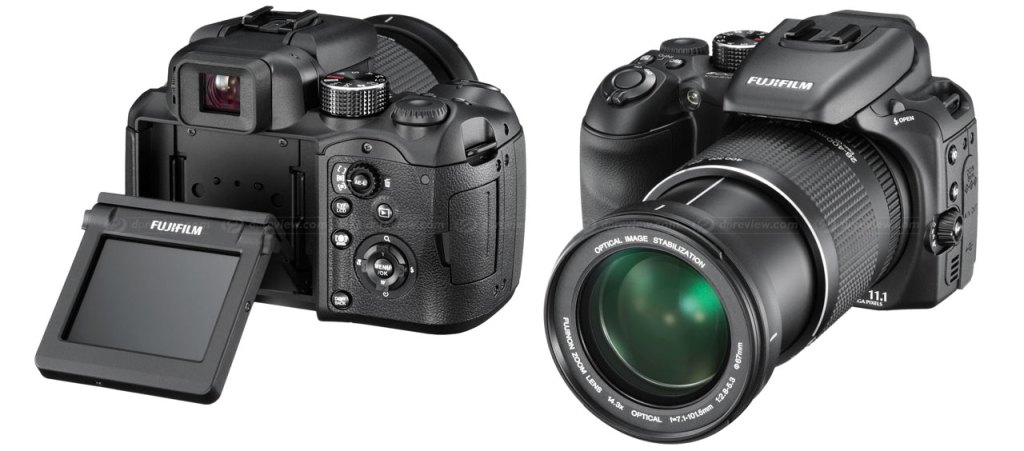
This was a fixed zoom lens camera, only 11 Mp, but the zoom was 28 – 400mm and image stabilised, an ideal range. And since I was a Fujichrome user, the film simulations were ideal.

So for the trip, I carried the Canon 40D with the Sigma 10 – 20mm fitted, and the Fujifilm S100fs. I thought that covered the range I needed, but if I found I wanted more, the UK was a cheap place to buy. The one thing I wanted to buy, and did, was a tripod. I had a particular model in mind, one with twist lock legs, but in practice I didn’t like it. I found the twist locks to be too slow and wanted to go back to snap locks, so once I got back to London, I traded the tripod in on a new lens for the Canon, a Sigma 28 – 200mm. NB: I also took a Canon video camera with me, capable of Full HD video, so my bag was full each day and quite heavy.

I’ve been extremely happy with the Fujifilm S100 and I still have it on my shelf. I don’t want to part with it. It’s a cropped sensor (smaller than APS-C) and only 11Mp, which sounds like a problem, but I’m very happy with the raw images at 3867 x 2913 pixels. Below is a “worked” RAW image, saved as a TIFF.
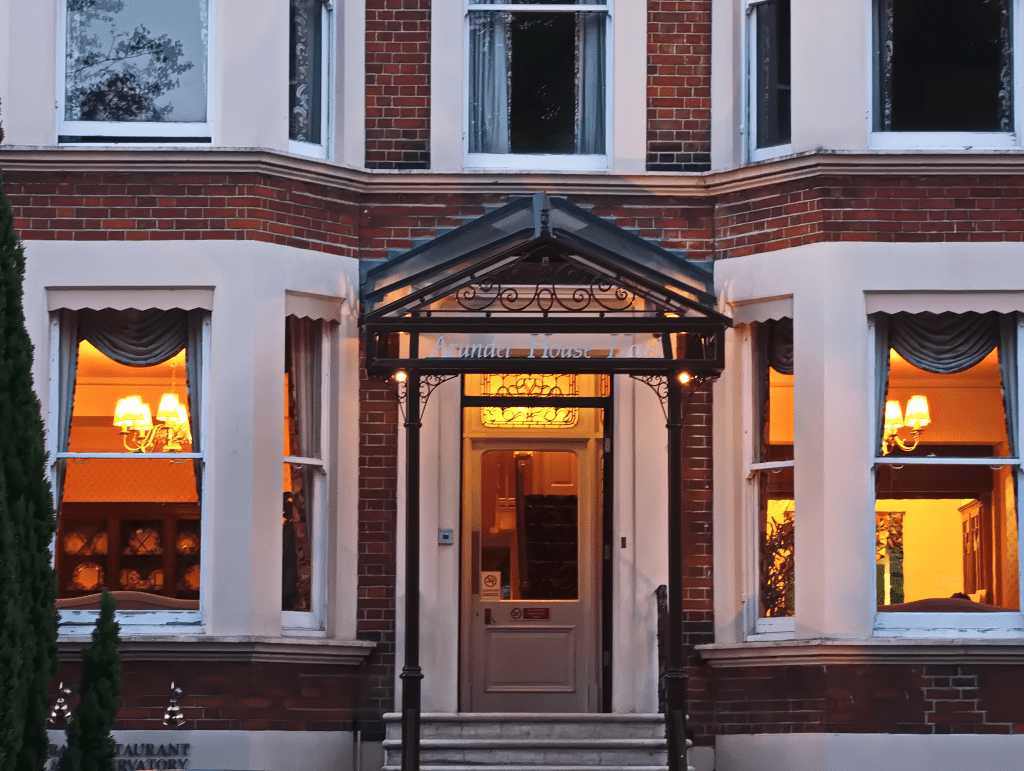
This is an 82.6Mbyte file, with some sharpening and noise reduction applied. I am very satisfied.

I must admit I was also very pleased to get back to the Canon sometimes, with its near full sized sensor, optical viewfinder and familiar controls.

To be continued.
My life in cameras part 4

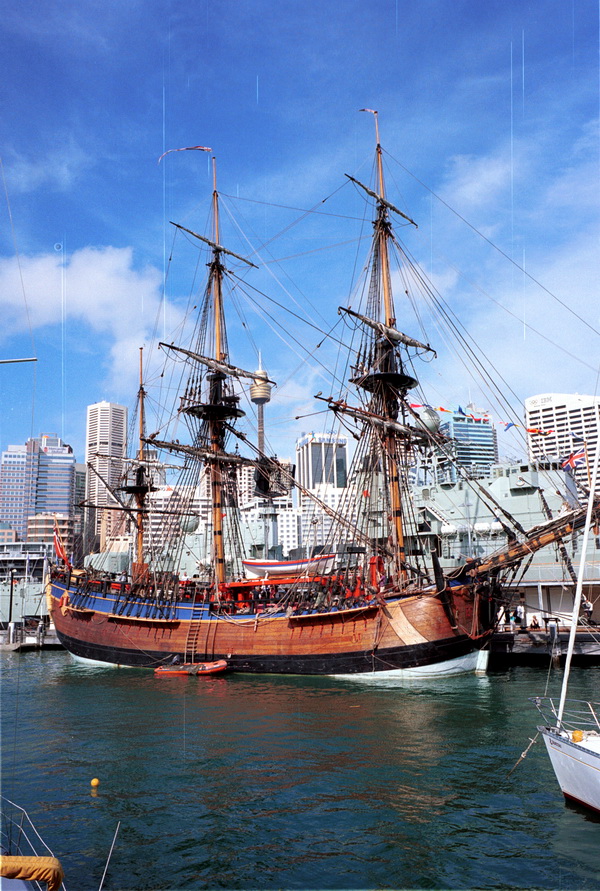
HMS Bounty replica, Sydney Harbour, 2000 Olympics. Olympus Stylus film camera, Fuji Provia 100. © PJ Croft

Did you think I was finished? Ha, no way, lots to come.

I left off in the last post in the early 1990s just after the burglary that cleaned me out. All my Olympus and Nikon gear was lost. Damned thieves! So I set about rebuilding my system(s).

I had always been a bag man and I had my favourite – it wasn’t anything fancy, just a cheap blue bag, but to me it was the perfect bag, almost. It just had four compartments, with two pockets on the ends. Very light, but most impoertantly, the straps folded right over the top without being attached to the top flap. This meant that you could pick up the bag without it tilting over, one of the things I’ve always looked for.

The drawbacks were (a) it used Velcro for the top closure, and (b) it used metal clips and rings to hold the top closed. Both of these made noise! One thing I didn’t want when stalking birds out on a lake or in the bush was sudden noises, and opening that bag top meant “r-i-i-i-p”, or jingle, jingle, jingle of metal on metal. Still I loved that bag and surprisingly, after a couple of years, I found another one, identical, $20. Done deal!

Surprisingly, before I found the replacement, one day at work I saw a woman photographer working in Studio 1 at Channel 7, and blow me down, she had what looked like my bag. Identical. I was so dumbfounded that I was silly enough to make a comment that it looked like my stolen one. Naturally, she got her back up and emphatically said it was hers and implied that I should go away.

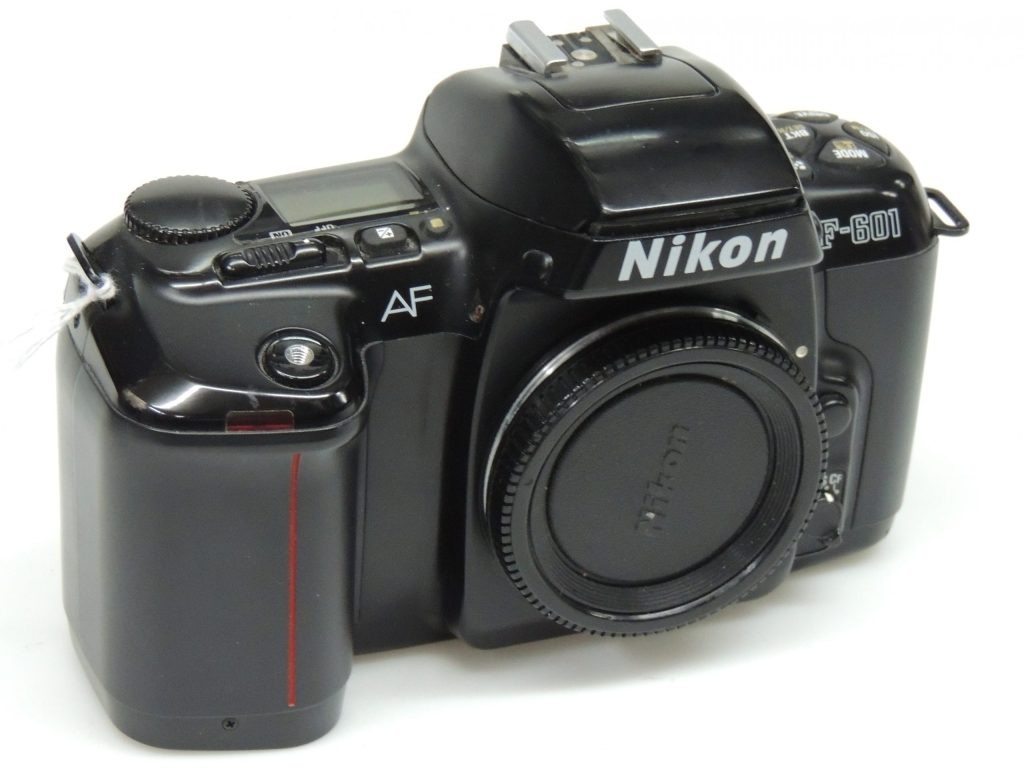
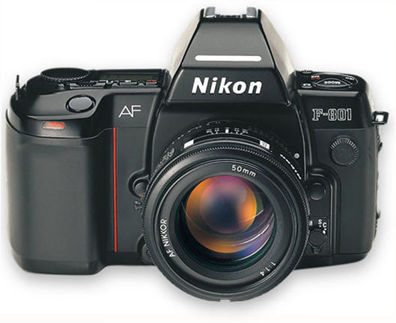
Anyway, I soon bought a Nikon F-601 to replace the F-801.

This was a cheaper version of the F-801 with a few nice additions, but a different shutter, nowhere near as nice sounding. It also had a pop-up flash in the prism area, which I liked. I quite liked this camera, but it wasn’t as nice as the F-801. It was all I could afford at the time.

I had the 50mm lens that came with it, and the 28mm Series E. I also found another Nikon Series E 75-150 f4, almost my favourite lens. Very sharp. So I was on my way again, especially as I bought the 300mm f4 IF ED and the new s/hand 200mm Micro Nikkor that I found in Sydney. Wha-hey, I was building a system again.

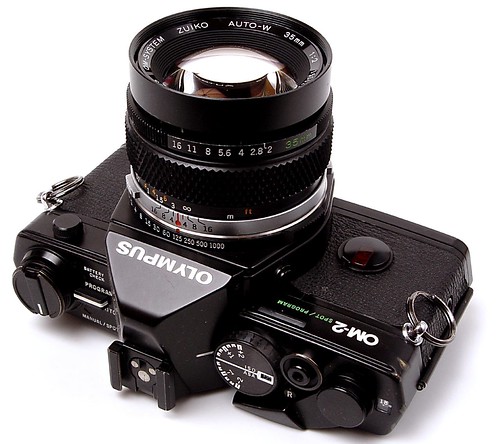
I also found a s/hand Olympus OM2 SP, so that got me going in Olympus again, nowhere near what I had before, but a start. As I say, I’ve still got that amera, complete with an unfinished roll of Fuji Provia in it. One o’these days I’ll finish it!

_________________________________________________________

Time moved on and I continued to make trips to Singapore, Kuala Lumpur, Fraser’s Hill in Malaysia, and Penang. Fabulous! I loved travelling in those areas.

Kuala Trengannu, Malaysia, 1992. Nikon FE2, Nikon 75-150mm lens. © PJ Croft 2024

It’s a bit hard to remember the late 1990s, but in October 1999 I took the offer of a voluntary redundancy from my workplace and retired. At age 52. A good payout saw me never having to work again, except for voluntary part time work at my old job. Ideal!

I remember feeling the absolute freedom to travel, without needing to scrimp and save, being able to stay in four star hotels rather than two or three star. And to buy my heart’s desires in cameras. I didn’t go wild, not at all, just a bit less restricted.

In particular, I had not yet moved to digital. I had a Nikon LS-4000ED film scanner, meaning I cold scan a frame of film to a 4000 x 3000 pixel digital image. I used to say, why do I need a digital camera (when 4-6Mpixel was the state of the art then) when I have a 12Mpixel device to scan my film?

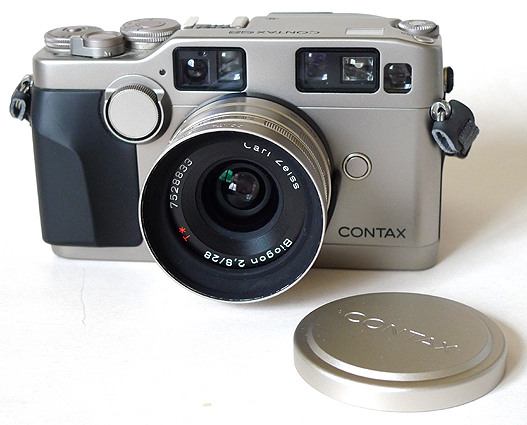
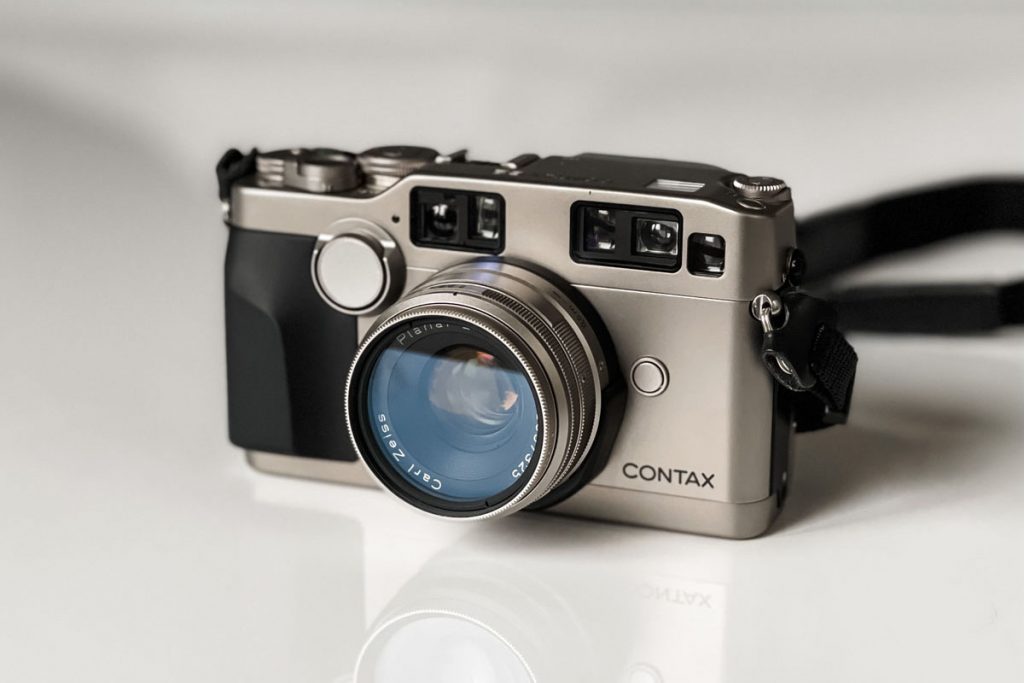
So on a trip to Singapore around 2000 or 2001, I bought a camera I had lusted after, the Contax G2 with its Zeiss 35mm Sonnar lens. Second hand in Singapore.

I think it cost me about $800, and the 28mm lens was about $400. It’s a very unusual camera – a rangefinder, but autofocus camera. Titanium body, made in Japan by Kyocera (Yashica) for German Contax. Lens made in Germany.

Of course, that wasn’t enough and on the same trip I bought a s/hand G1 as well, and a 35mm Zeiss lenns, and the 90mm Zeiss as well. And the accessory flash. The G1 was the first model in this new range, succeeded by the G2 obviously.

It turned out that when I tried to use the 35mm on the G1, it wouldn’t work. Can’t remember exactly why but the shop told me there was an official mod needed. Go to the service centre in XXX industrial suburb, they told me. So, taxi there, please wait while it’s done, that’ll be $50 (??) please, and there’s a small green sticker in the film compartment to show it’s done. Taxi back to the hotel.

Wow, was I pleased with this purchase! I had spent about $1500 and I figured it would be worth at least $2,000 in Perth if I got tired of it. So I figured I was pretty safe.

Well, my experience has been terrrible. For one thing, the autofocus requires you to centre a small circle in the centre of the viewfinder on the subject before it will try to focus. This means I don’t think I’ve had a single sharp image in the whole time I’ve owned the cameras! It’s too hard. I’ve seen plenty of beautifully sharp images on the Web, but I can’t get these cameras to do it for me.

So I’ve found a way to adapt the Zeiss lenses to a modern Sony digital camera. More of that anon.

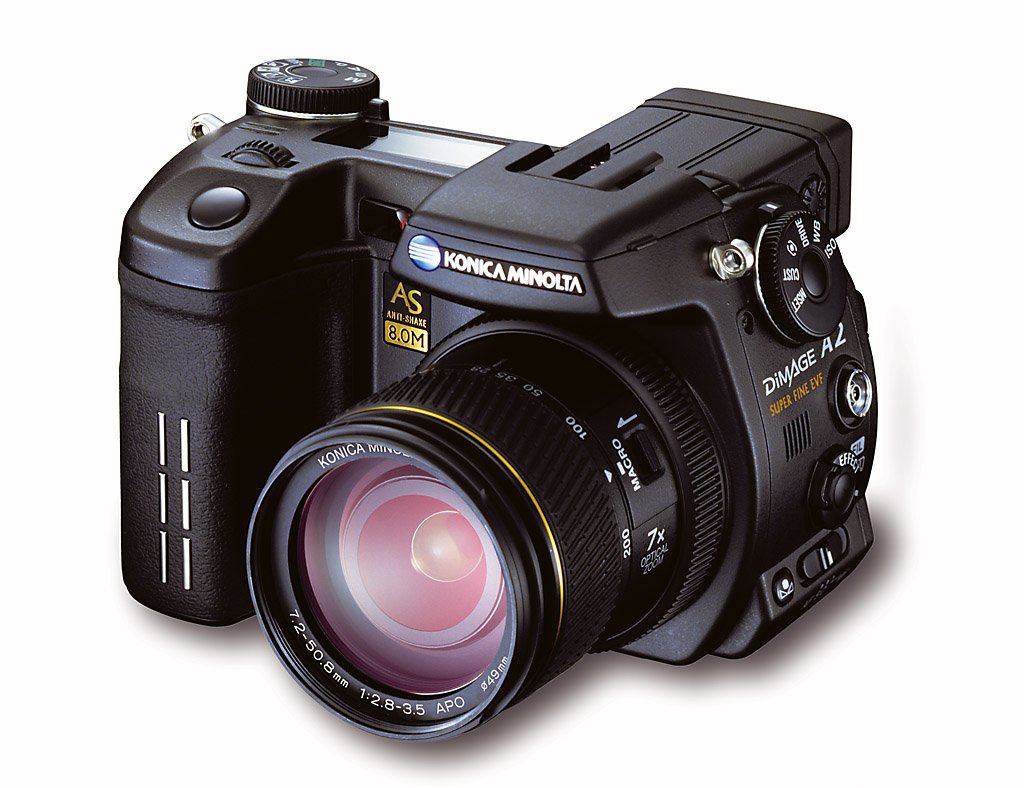
That leads me to my first real digital camera, the Konica Minolta A2.

This image is from Amazon.com, it’s a used camera (obviously) listed at US$159.50 (A$245.38).

This was a lovely camera and I’ve still got mine. Only 8Mpixels but that seemed enormous in 2004.

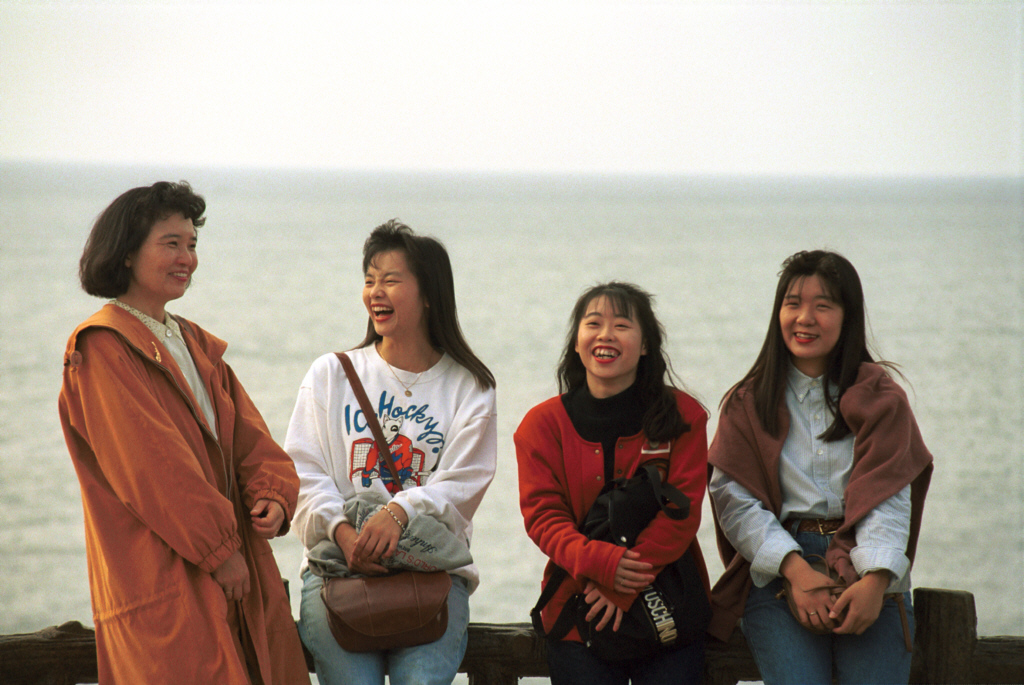
KONICA MINOLTA A2 ISO100. Notice the restricted dynamic range (burnt out highlights) © DPReview

This was a fixed lens camera, so there was no buying extra lenses. It was a 28 – 200mm manual zoom, ideal for me. I liked it very much. I bought it at a camera shop at Whitfords City in Perth. I can still remember the frustration of having to wait for the battery to charge before I could use it (about 3-4 hrs), and the remark by someone about “Wow, 8 megapixels!” as that was a lot in those days.

That got me through a long time before I bought my next digital camera. I spent months digitising all my Japan Fuji Reala negatives from my 1992 trip and I loved the results. This was around 2005 I think, in the first few years after I retired, as I had all the time in the world. There were about 350 images.

Nikon F-601 75-150 Series E lens, Fuji Reala film © PJ Croft 2024

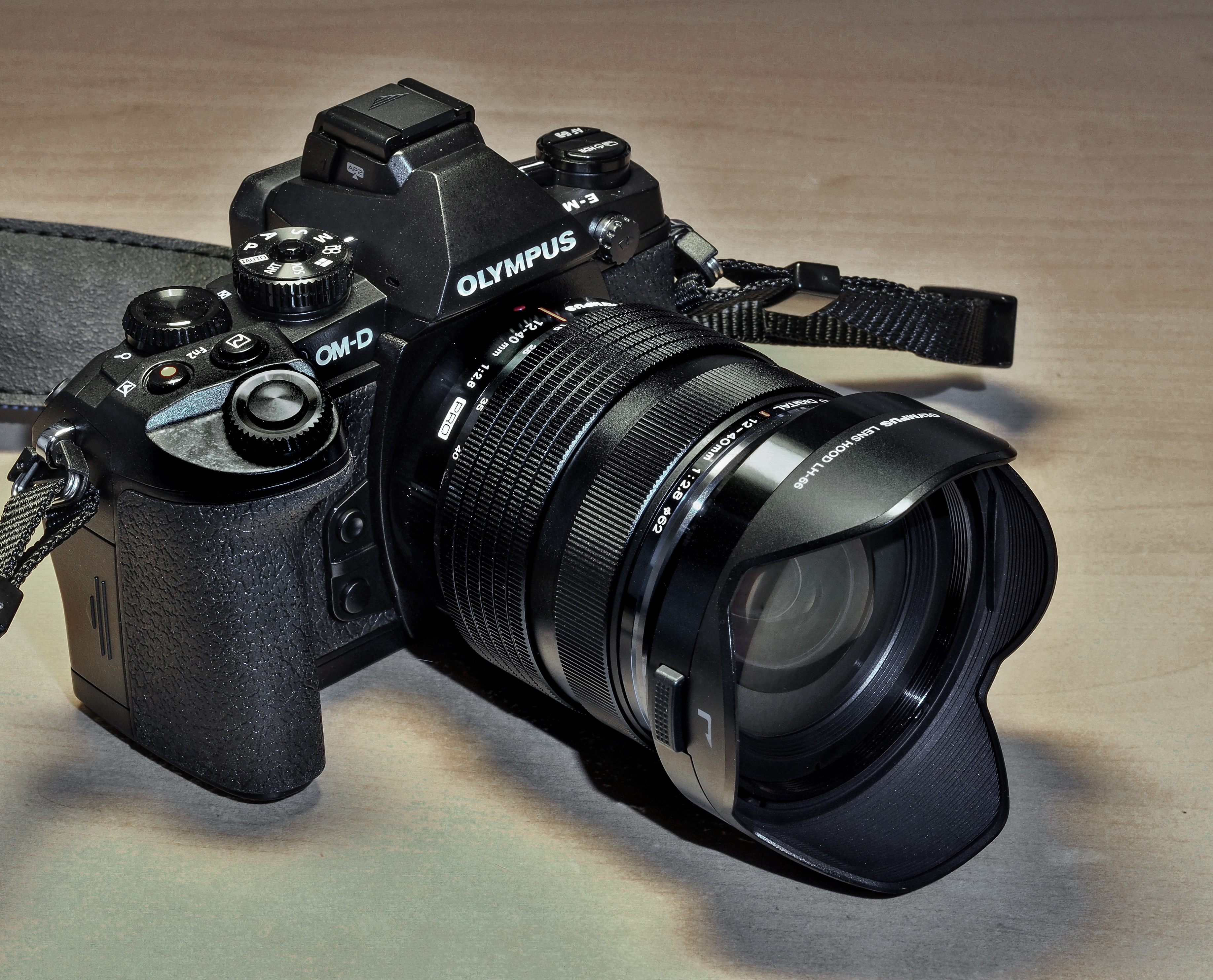
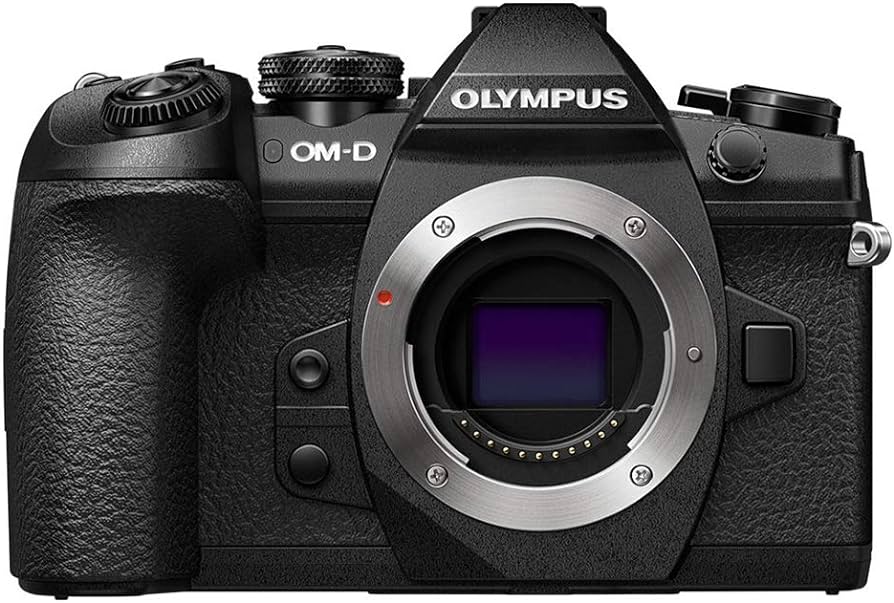
I’m struggling to remember my next digital camera. I know that I bought an Olympus OM-D E-M1 in about 2014:

This is a beautiful camera, but boy it’s hard to learn its use. Switches everywhere and complex menus. But the image stabilisation is magic. This was Olympus’s first Micro 4/3 sensor camera. This was a cropped (reduced size) sensor in the 4×3 proportion. It has the huge benefit that there are adapters to allow the use of almost any lens from any maker. I’ve got an adapter to fit the Minolta 250mm mirror lens that I mentioned in part three to this camera, with the benefit of doubling the focal lenght to 500mm with brilliant image stabilisation. I love it!

It came with a 12-24mm “collapsible” zoom lens and a tiny flash, (which I’ve hardly ever used). I’ve since bought an Olympus 75-300mm M. Zuiko, which is equivalent to a 150-600mm in 35mm terms. It’s a lovely sharp lens.

Olympus OM-D E-M1 with M.Zuiko 75-300mm lens © PJ Croft 2024

To be continued. Lots more to come!
My life in cameras part 3

Yes, I still have this, but shooting film is too expensive.

Did you think I was finished? I hope I’m not boring you but there is much, much more to come.

When I left off in the last post, I was into Olympus OM and wow! The OM system in the 1980s and 90s was incredibly well designed, extensive and desirable. And through scouring the second hand shops in Perth, I built up a big collection.

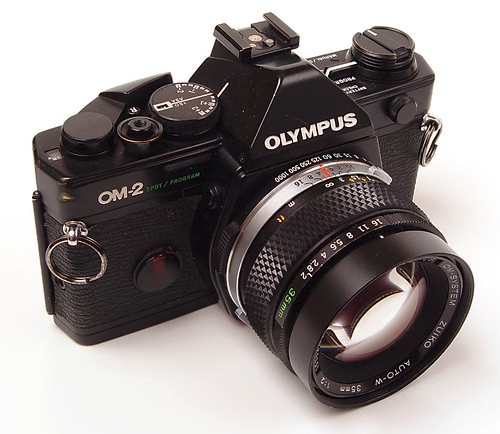
I only ever had the OM2 Spot/Program body, just the one, but as I said, I had 18mm, 21mm, 28mm, 50mm and 135mm Zuikos, which were renowned for their smallness and sharpness, and I can vouch for that. I’ve still got the 28mm but lost the rest to a burglary in 1990. More on that later.

Olympus’s flash and macro system was the best on the planet and I lusted after all of it. I never bought their actual macro lenses, but by using highly corrected dioptre lenses (ie +1, +2 and +3 close-up lenses, as they were called), with the Olympus flashes I bought, I was able to get excellent results.

I have, or had, nearly all these things. Wow, I loved the thrill of the chase. It wasn’t just Perth, I was hunting in the shops in Singapore and Kuala Lumpur as well.

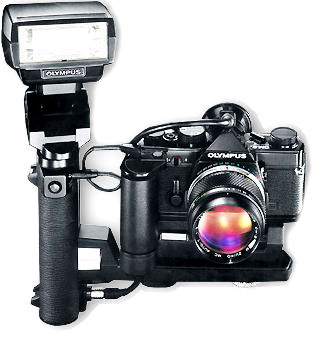
One thing I did, after I got into Nikon (which see), was to use a T-adapter to adapt a Micro Nikkor 200mm macro lens to the Olympus OM2 SP body. Why? To be able to use the Olympus’s flash system with the 200mm reach of the Micro Nikkor. It was unweildy, but it worked. Sure, you couldn’t focus to infinity, but you didn’t need to – this was close-up work.
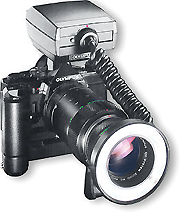
Here’s a shot I took with this setup, i.e. the 200mm Micro Nikkor mounted on the OM2 SP body with an Olympus T32 flash held out to the side on a coiled cord. All the while trying to keep my feet in a muddy jungle grove near Fraser’s Hill in Malaysia.
© PJ Croft 2024

As I say, I still have the OM2 SP body, with a roll of Fuji Provia slide film still in it, waiting to be finished!

___________________________________________________________

Nikon time …

It had to come. I had talked about my gear with other guys at work who were also into cameras, although no-one was as obsessed as me, and people repeatedly asked me why I didn’t use Nikon, one of the top two brands at the time. I said it was because:

  • I didn’t have any Nikon lenses at the time, except the 200mm Micro Nikkor
  • I had never liked the way the lenses worked in reverse, i.e. anticlockwise twist to mount, and anticlockwise turn to focus. The opposite of all the cameras I’d had up to then.
  • It was an expensive system, although very high quality.

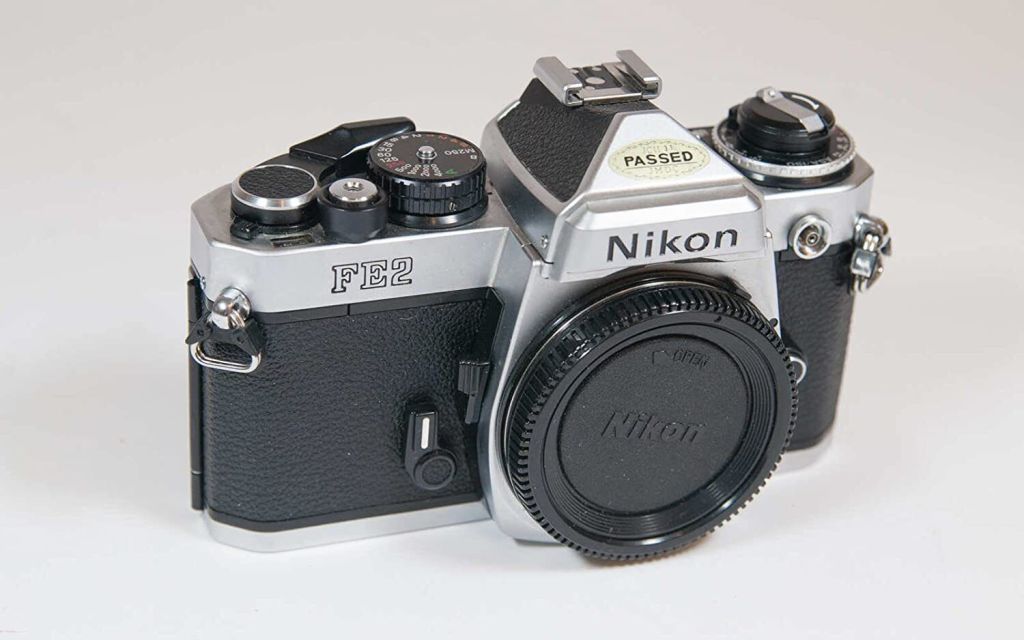
Eventually, I bought a 55mm Micro Nikkor from a pawn shop in Perth. Scatched front element, but for $75 I took a chance (and it was good). Well, that made two Nikon lenses, so I had to have a body, and in about 1986 I bought an FE2.

Auto exposure (aperture priority) but AF wasn’t a thing then. Lovely camera, wonderful shutter sound. I loved it.

Then around 1989, this was released. Wow, I had to have it.

I bought it in 1989 for a trip that Geoff Williams and I did. This was still film days, remember. This was my first autofocus camera, although I only had one AF lens, if I remember correctly, the 50mm AF that came with it. But I still had the 200mm Micro and I also bought a Nikon Series E 70-150 which became almost my favourite lens. The Series E lenses were Nikon’s cheaper lenses to go with their Nikon EM (“economy model”?). But they were extremely high quality lenses, especially the 28mm which I sold to a friend. She loved it.

I also had my 55mm Micro Nikkor (Micro was Nikon’s way of saying macro). It was in a pawn shop in Hay St for $75 and had seen better days. In particular, it had a few small scratches on the front element (how they could do this is beyond me, considering how deeply recessed the front element is). Anyway, in view of the legendary status of this lens, I decided to take the risk, and I’m glad I did. Here’s an example shot with it:

Boats, Collyer Quay, Singapore, 1986. Kodachrome 64 © PJ Croft 2024

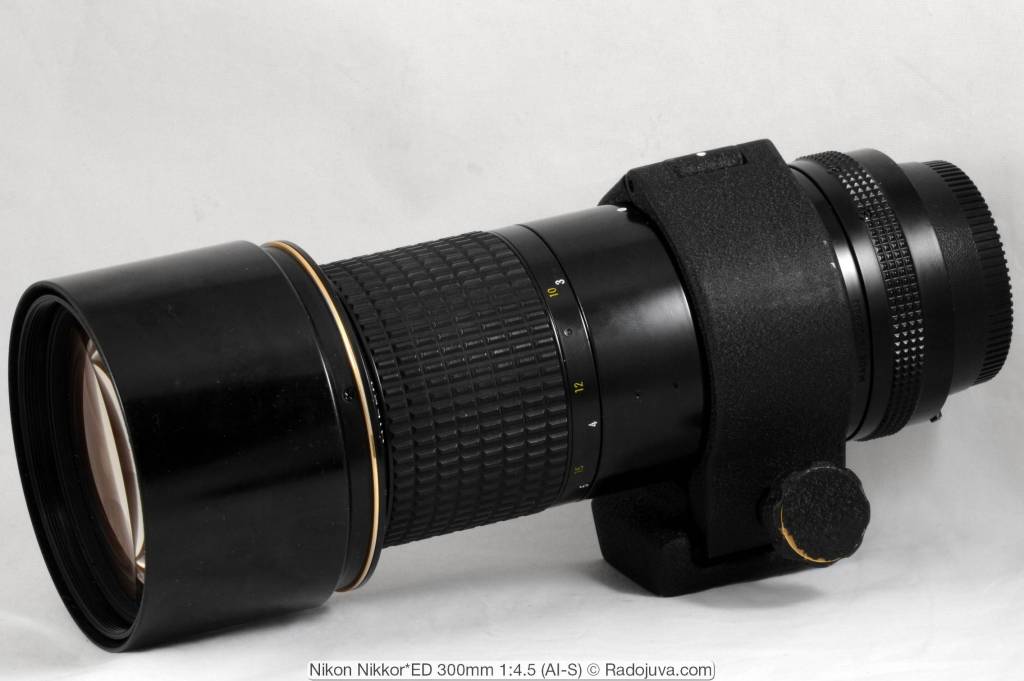
From then on, I used both systems, the Olympus and the Nikon. I also bought a beautiful 300mm f4 IF ED Nikon lens, below. (IF stood for Internal Focusing, meaning the glass elements moved within the lens, so the length didn’t change as you focused. ED stood for Extra Dispersion, i.e. special glass to minimise aberrations.)

This lens cost about $2,000 I think, but to me, it made me feel professional. I was heavily into bird photography and landscapes.

I think the F-801 was the best handling camera I had ever used. The buttons just fell under my fiingertips, I didn’t have to think about what I was doing, it came naturally. I got some of my best shots ever on that trip to Java using this camera.

© PJ Croft 2024
© PJ Croft 2024

Disaster!

Then in 1989, I arrived home from work one night at about 11.30pm to find a front window jemmied open and a big lot of my possessions missing. In the lounge room, my Technics SL-P1 CD player and my Nakamichi cassette deck. Also my entire collection of around 100 CDs were taken.

In the bedroom, all three camera bags with all my equipment were gone. A wooden vintage camera was smashed. I was very upset, as you can imagine. All those items above – gone! All the small adapters, rings, filters lost. Years of collecting.

Obviously I called the police the next morning. They came and sniffed around, writing a report, but I didn’t expect any return of my things and I wasn’t wrong. I said something to the effect of “I’d better take precautions in case they come back.” No, they won’t come back, said one of the coppers.

Well guess what – they did, about three months later (see below).

Luckily, I was properly insured and I got a full payout, but it depended on me recalling all the things that had been taken. I did have serial numbers of a lot of the gear, but not all, and for months and years afterwards, I was recalling items that were missing but I’d forgotten about. Not too many, luckily.

However, the insurance company insisted that to maintain my insurance, I had to have a burglar alarm fitted. So I did. It was a full professional job, about $1,000 worth, I think, and it was very effective. More than once, I accidentally triggered it and lived to regret it. It was LOUD!

The Rebuild

From then on, having the insurance money, I set about rebuilding, buying second hand. One thing was – all my CDs, I recalled from my memory. Yes, it took me a few days, but I was able to build the list in my mind and write it all down. CDs had value then – no-one wants them now.

The Return of the Burglars

Despite the policeman’s reassurance that “They won’t come back”, I got home from work one evening to find the sliding glass door to my bedroom smashed to smithereens. Luckily it was afety glass and just smasshed into small pieces, but it meant my house was open to the world. They’d used a jemmy on the lock and it was torn out of the brickwork, but I was able to fix that.

But nothing was taken. I think the alarm must have done its job and scared them out immediately. Good work. I didn’t have dogs then either.

So from then on, I slowly rebuilt a system, not exactly the same, no Nikon bodies, no 300mm, but I did find an Olympus OM2 SP second hand in a camera shop in London Court and bought that. Then, on a holiday in Sydney in the ’90s, I found another 200mm Micro Nikkor in a Sydney camera shop and couldn’t resist it. It cost $800. I know, because it cleaned me out of the money I’d allocated to rent a car and do some touring. Oh well, at least I had a solid asset in my hand instead of money “wasted” on car rental and hotels.

To be continued – the digital age!

My life in cameras, part 2

It rained yesterday! To my eastern states or overseas readers, that might sound silly, but it’s the first serious rain (more than just a ten second sprinkle) in three months. This has been a record hot dry summer in Western Australia. This is global heating at work, folks.

It’s particularly serious here in WA as we’ve lost around 20% of our annual rainfall on a permanenet basis, since 1977. I can remember noticing that year and how dry the summer was. We used to have adequate dams, which filled reliably every winter, for our water needs. No more. Most of our dams are only 30-50% full and have no hope of suppllying the needs of a city of 2 million people who need to pour water on lawns and gardens.

Our main water supply comes from underground now, but even that’s becoming depleted as it’s not being replenished by the low rainfall. It’s very much supplemented by hugely expensive seawater desalination plants. We have two already and a third is being built now, just up the highway from me, actually.

Anyway, back to more interesting stuff. Cameras!

_______________________________________________________

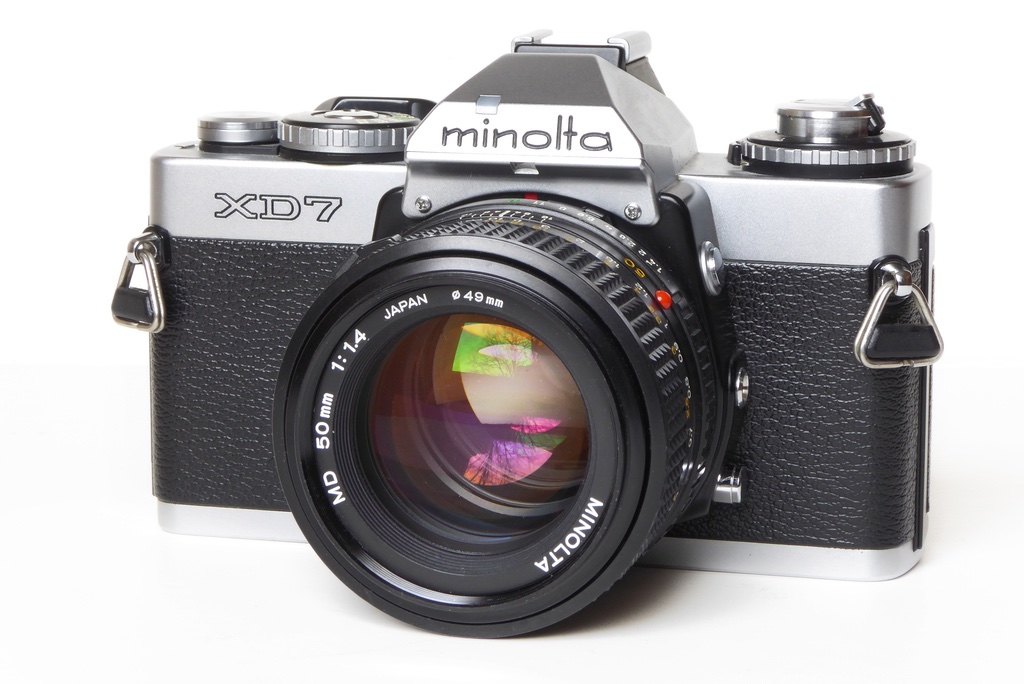
After the Pentax departed, I thought I’d found my forever camera, the Minolta XD7.

Wow, I thought I’d hit the jackpot. I loved the looks, I loved the feel, I loved the multi-mode operation. It was an aperture priority/shutter priority/program/manual camera, all the things I liked. I can’t remember how I got it – I think I bought it new on one of my many trips to Singapore in the late ’70s.

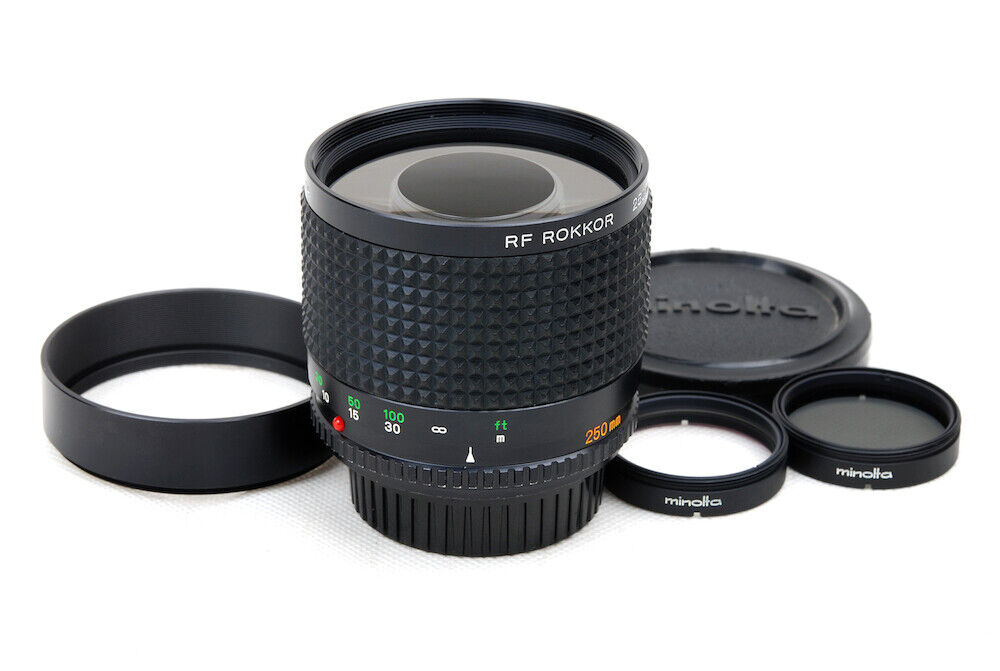
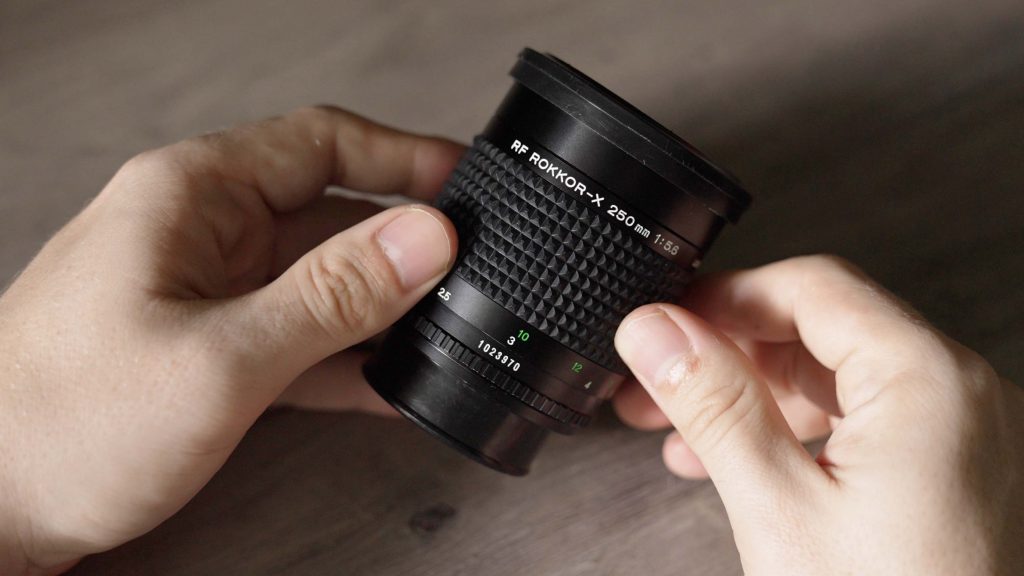
I started a small collection of lenses, the 50mm standard lens, a Rokkor (Minolta’s brand) 35mm which I still have, a Rokkor 100mm (which I didn’t like and sold to a guy at work). And most especially, the beautiful Minolta RF Rokkor 250mm f5.6 mirror lens, which I still have right here.

The thing about this lens is that it was so small and light that I thought I could hand-hold it without camera shake. But I couldn’t. It was deceptive. I don’t think I ever got a sharp image hand holding it. Even so, I loved using it. Mirror lenses were a big thing in the ”80s and I also owned a Tokina 500mm f8 mirror lens. That was a heavy lens and the weight actually assisted hand-holding. More on that later.

I hold onto the Rokkor 250mm lens these days because things have changed. You can get lens mount adapters now and I’ve got an adapter from Minolta to my Olympus OM-D E-M1 Digital Micro-4/3 camera. This doubles the focal length to 500mm, but crucially, gives me excellent, amazingly good image stabilisation, meaning I can hand hold to my heart’s conntent. And it’s digital!

I also bought a second hand Minolta XE-1:

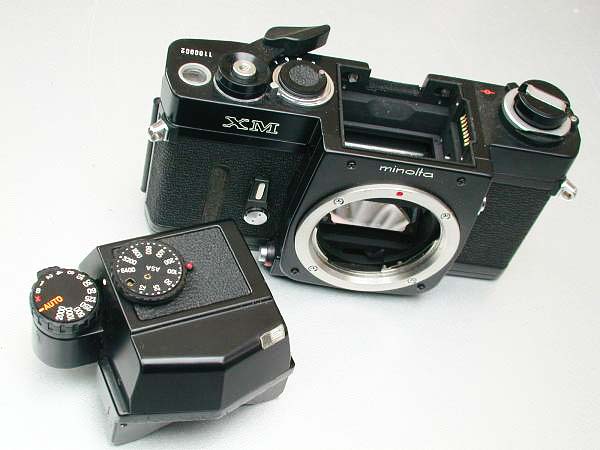
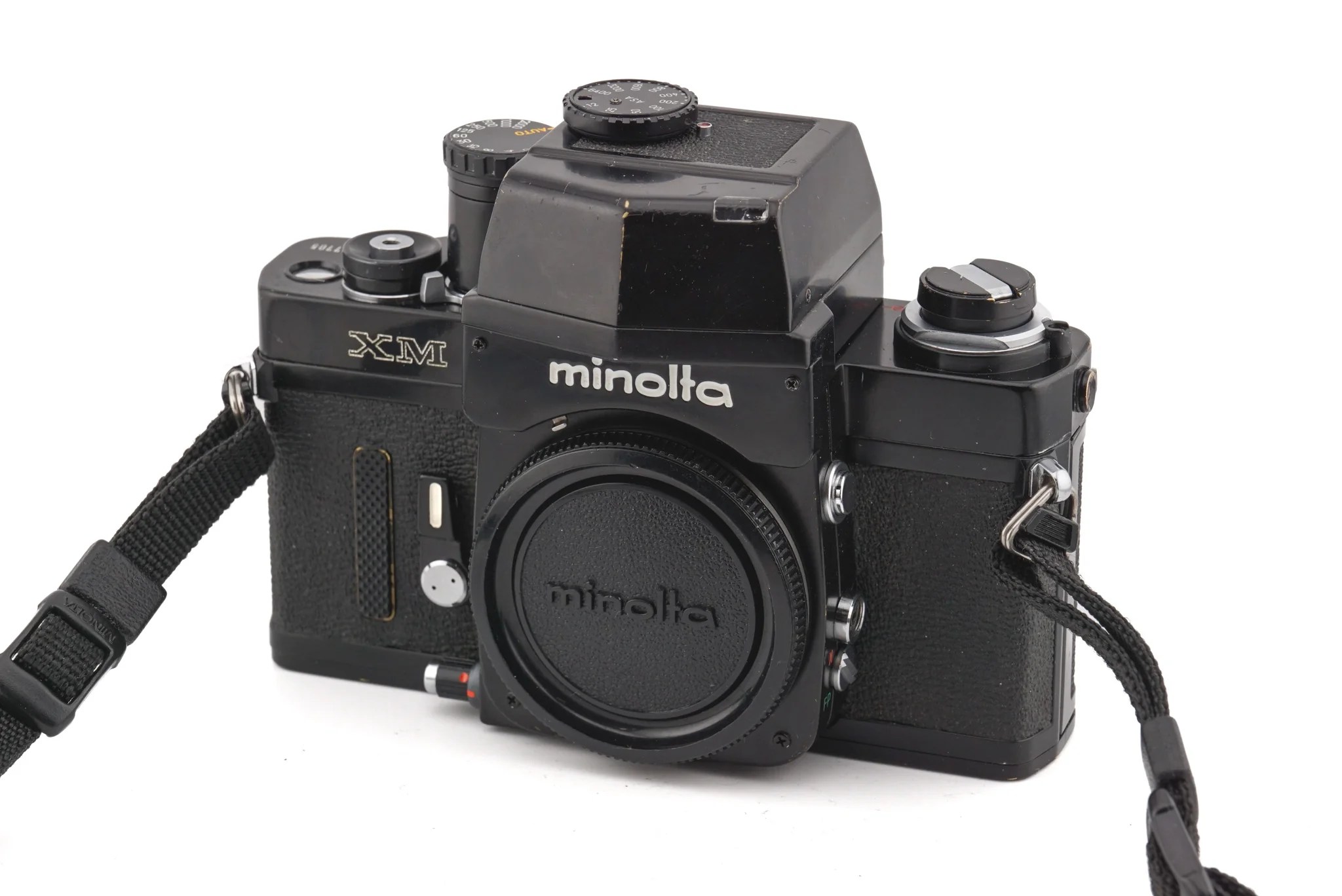
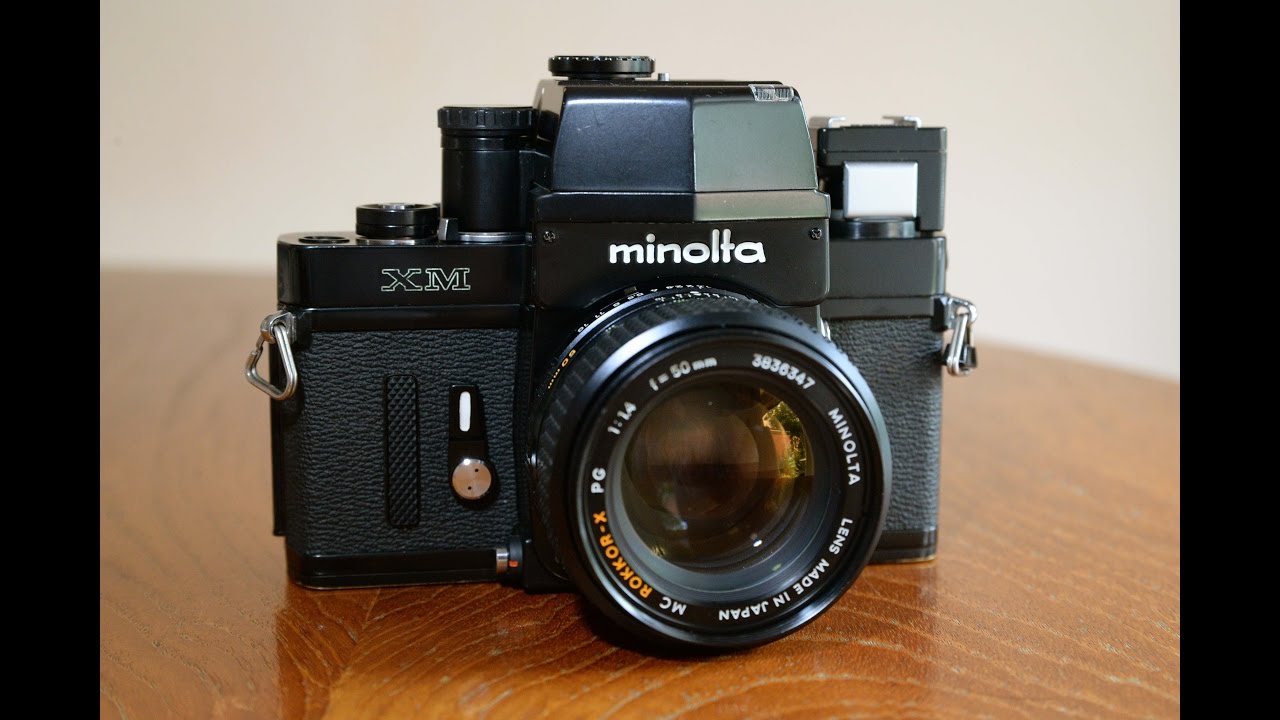
And I also bought my heart’s desire, a Minolta XM. This was Minolta’s attempt to get the professionals to buy into the Minolta system, (but it was never successful). It’s built as if you could use it to hammer nails.

I still have it! It’s big, it’s heavy but it’s beautiful. Titanium shutter curtains. Interchangeable (removable) prisms. Interchangeable focusing screens. I’ve still got this camera. When I initially bought it, mine had a plain prism, i.e. no light metering. No problem, I used a hand held meter. But I spent literally years looking for a full metering prism as shown above, and finally I found one, second hand, of course, in the camera shop in Forest Place in Perth (before Myer was built, demolishing that whole block of shops). It cost me $150 for the prism but I was rapt! I’ve still got it, and I thought this camera would appreciate in price, as it was always a prestigious camera. Unfortunately, it’s depreciated badly and is only worth about $100 now, the whole thing! However, I still have the 35mm and the 250mm lenses, so I can still play around with it. But film has become so expensive and so inconvenient that I would never bother with it now. Pride of ownership only.

So I had quite a big Minolta system in about 1978 or so. Why did I switch away? Shutter shock in the XD7. That’s when the action of the shutter mechanism in the camera induces camera shake, and that’s what I was discovering. My images weren’t sharp. I can’t exactly remember what I did with the whole system – probably sold it to a guy at work.

______________________________________________________

I left off at the Pentax Super A. I was very fond of that camera, so why did I go away from it? Two reasons, (a) a friend wanted to buy it; and (b) I lusted after an Olympus OM camera. It was mainly for the Olympus OM system of macro and flash stuff. It was by far the best in those days, the 1980s. So I sold the Pentax and Minolta and bought an Olympus OM2 Spot Program (OM2 SP), which I still have, although it’s not the same one. More on that later. It’s still got a film in it, too, awaiting me finishing the roll and taking it for processing!

I should add that this was a time when duty free (tax free for overseas travellers) cameras were quite low priced in Australia for some reason (strong Australian dollar, tax 33.3% I suppose) and I only paid about $145 for this camera, brand new. I was rapt!

I quite soon started to build a system and I was finding used Olympus equipment in the thriving second hand windows of shops in Perth. I soon found 18mm, 21mm, 28mm, the 50mm that came with the body, and 135mm genuine Zuiko lenses. In addition, I bought a Sigma 50 – 200mm APO zoom in Singapore. (APO means apochromatic – corrected for all colours to produce fringing-free, sharper images).

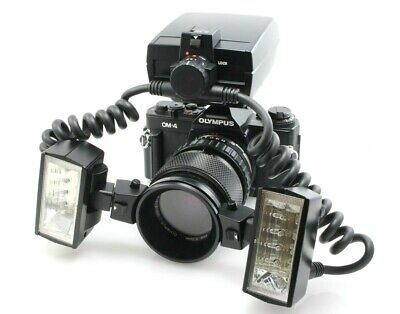
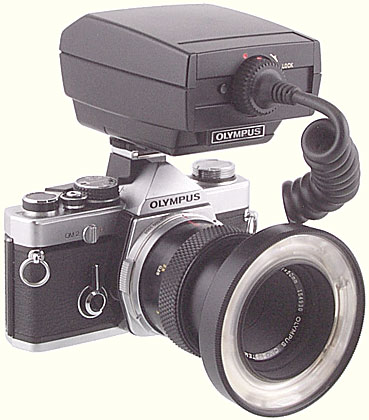
Then it was into the macro and flash system, and boy, Olympus had the best system of any maker then. I found most of this stuff second hand:

I owned all these and more. In fact, I still have a lot of this flash equipment stored away in a box that I haven’t opened in over a decade. And more:

I had all this! I bought most, if not all of it, second hand as there was a lot of it available. I had to get rid of the big flash grip at left because it overheated every time I tried to use it. No matter, I had an equivalent Metz unit and flash. As you may gather, flash was very big back then. It’s not so important now due to the incredible sensitivity of digital sensors. You can shoot at ISO3200 or more now, so you don’t need flash, although it still helps sometimes.

More to come, much more!

My life in cameras part 1

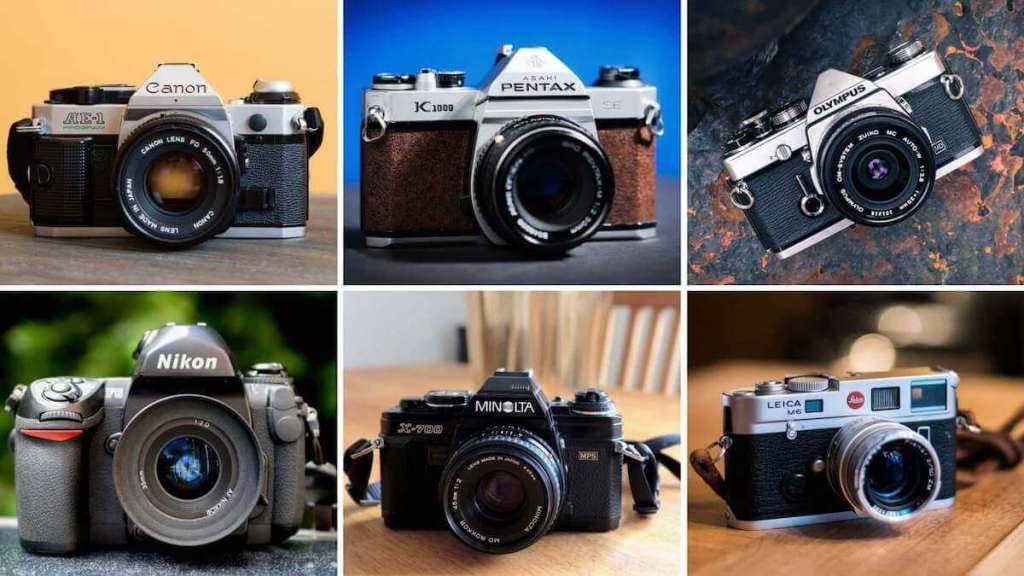
A collection of fine cameras: no, not mine.

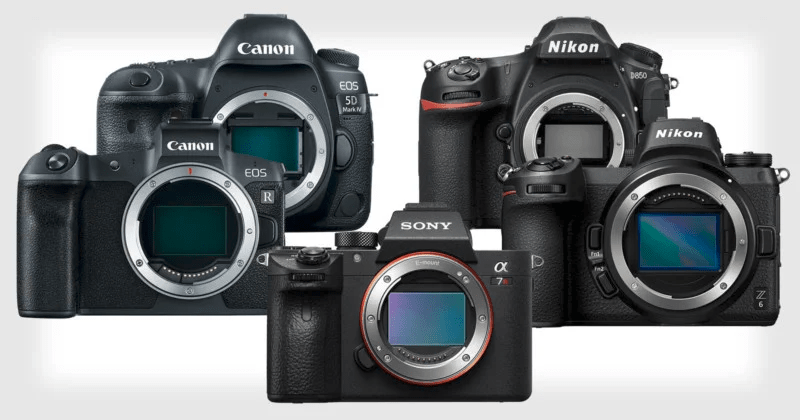
My post today is a result of my favourite blogger, Mike Johnston, of The On-line Photographer ( T.O.P. ) suggesting that he is going to compose a list of ten favourite cameras, compiled from reader suggestions.

But it will probably be restricted to digital cameras, since film is too, er, retro?

That set me thinking that I would like to do a kind of biography of all the cameras I’ve owned and used since I started in about 1969. That’s 54 years; this will be a long post!

_______________________________________________

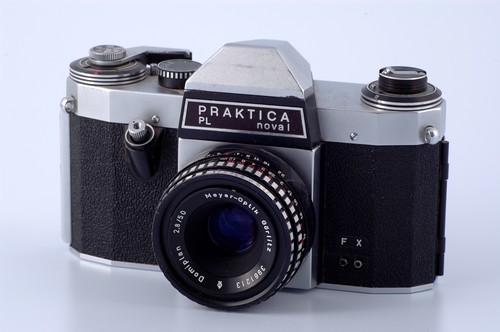
My first camera (apart from borrowing Dad’s Voigtlander twin lens) was the Praktica Nova 1B.

Praktica Nova 1B

I remember I bought it from a camera shop (remember those?) in William St, Perth. From memory, with Tessar 50mm lens, it cost about $120 I think, a lot of money then. These cameras were made in what was East Germany, Dresden I think.

It sticks in my memory because when I received my first roll of film back from processing (you had to send Kodachrome off to Melbourne for processing, taking about a week!), it was totally blank. Kodak included a note saying very politely, we think the film has not gone through the camera, due to not being attached to the takeup spool. I was extremely disappointed, as you can imagine. I never did that again. I developed the habit of using my left thumb to turn the takeup knob to check for resistance, signifying that there was film on the spool. It served me well.

Being a Zeiss Tessar lens, the quality of the images was very good, although I seem to remember flare was a bit of a problem. I kept it until about 1972, then donated it to the son of one of my cousins.

_______________________________________________________

My second camera was a source of great excitement, because I bought it in Singapore on my first trip overseas, to the UK, with my good friend from high-school days, Geoff Williams.

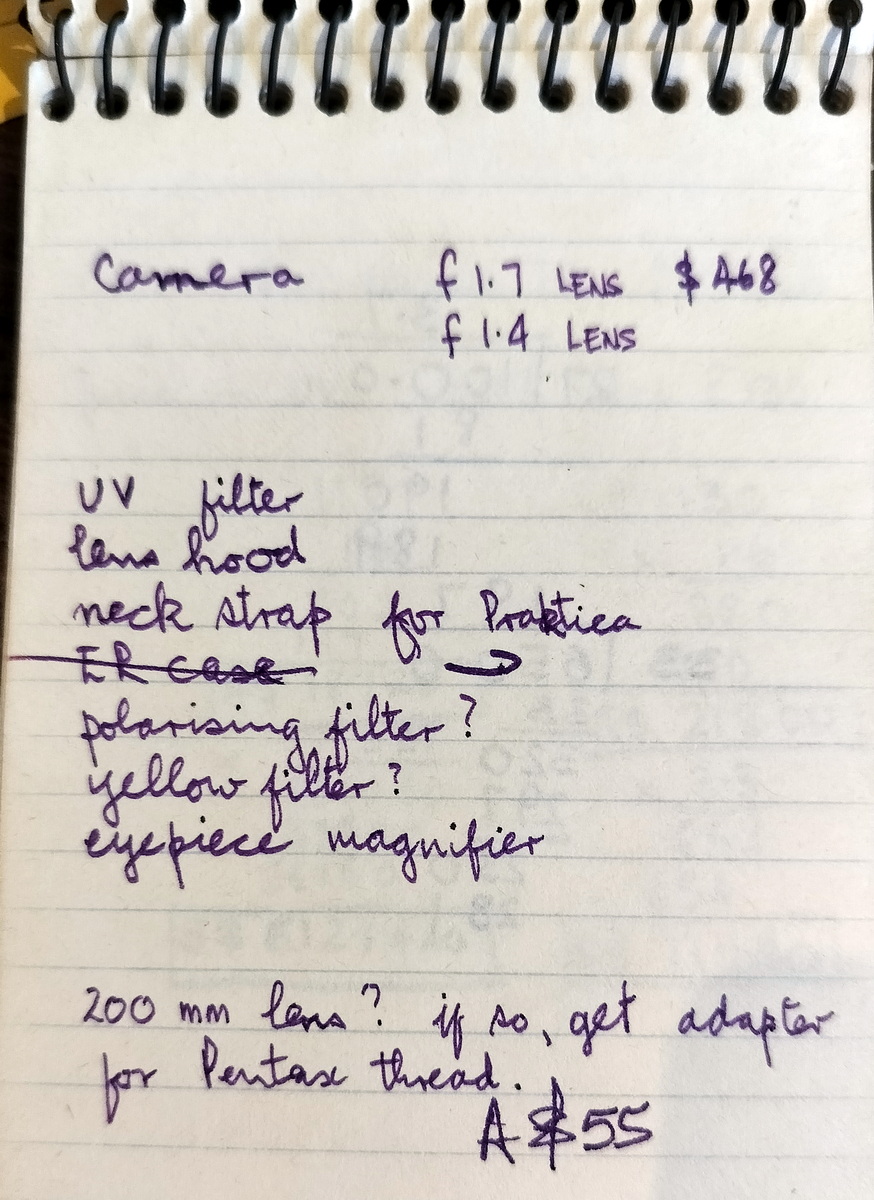
On the right, my travel notebook from 1974. I can still remember buying this camera, at a shop called Evergreen Electrical on the north side of People’s Park shopping centre, New Bridge Road, Singapore. I think I chose it on the basis of good reviews in Modern Photography magazine. Plus it was shutter priority auto exposure – you set a shutter speed and as long as the meter needle was in the zone, i.e. between f1.4 and f22 approx, then the camera set the aperture on the lens. I was a shutter priority believer. This was called “trap needle” automation in Konica-speak. Would you believe, a metal bar inside the camera lightly clamped down on the meter needle, and depending where on the bar, therefore that set the exposure.

It cost me S$468, and since the ratio of dollars then (1974) was A$1 = S$3.70, that made it A$126.49 – a bargain! I bought it with the Konica Hexanon 50mm f1.7 lens and of course in those days it came with the “never-ready” leather case. Geoff bought a Minolta SRT101 with Rokkor 50mm lens, and I remember having a slightly animated discussion about whether he should spend the extra money to get an f1.4 lens. He did. I thought it was a waste and he should have saved money with the cheaper f1.7.

I also bought a Vivitar 28mm lens, and a day later a Vivitar 135mm lens in Change Alley. Wow, what a great time I had. I loved that camera and kept it until 1980 when I sold it to a work mate. *Story to come.

_______________________________________________________

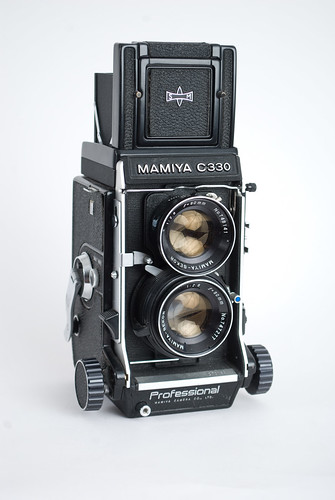
My next purchase, while I still had the Konica, that is, was a second hand Mamiya C330 twin lens reflex with standard 80mm lens.

(C)Gustavo Vasquez

This camera was unique for a twin lens, in that you could change lenses. The lenses were mounted on a metal “board” that was clamped to the main body by a wire lever. Crude, but it worked. I also bought a used second lens panel, a 28mm equivalent, although I had a lot of trouble with it, due to the aperture blades sticking. I think a previous owner had tried to lubricate them and used the wrong lubricant.

I owned this for quite a few years and it made a trip to Bali with me, on my first visit in 1980. It was an unwieldy camera to use, having to look down on the viewfinder from the top, on a laterally reversed image. It used 120 size film with 12 shots per roll. There was no snapshooting – each image had to be composed with the camera held at waist level. But the quality of the images was superb. I had a few stored away but they seem to have got lost. I donated it to my neice-in-law, who has repaid me by cutting me off, not speaking to me for more than 11 years.

________________________________________________

In about 1982 one of my workmates asked if he could buy the Konica setup from me. Sure, I said, as I was always looking to change cameras in those days.*

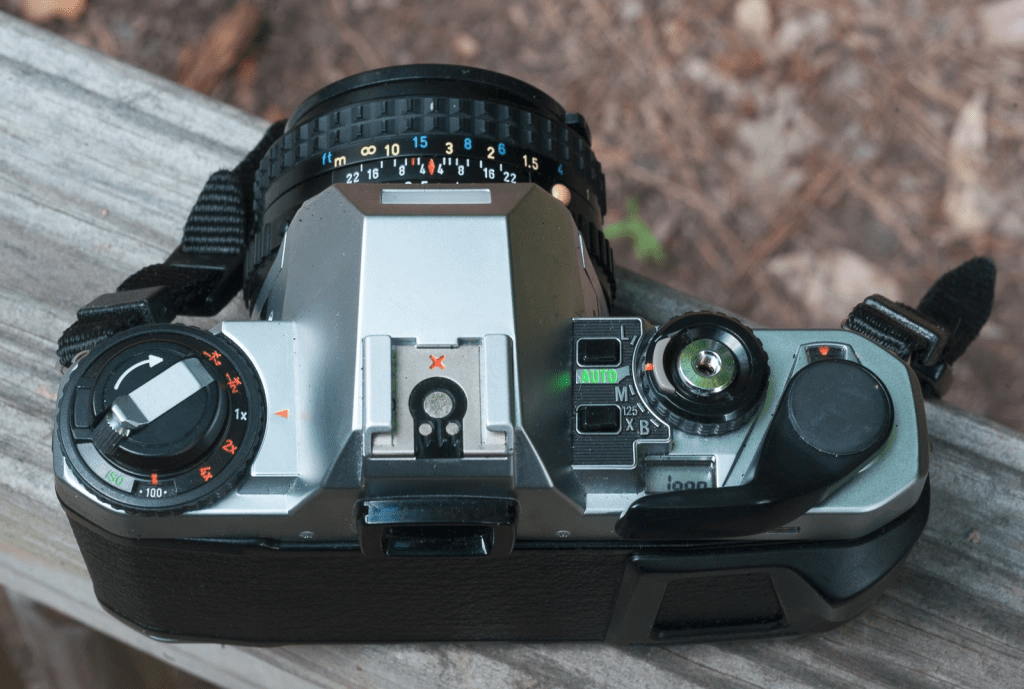
My choice for my next camera was one of my favourites of all my “career”, the Pentax Super A with 50mm lens as shown.

Pentax Super A

I think this was a great design. It gave Program exposure, Aperture Priority, Shutter Priority and Manual exposure, simply by setting the lens aperture ring to A, or the shutter knob to A as desired, or leaving them independent for Manual. There was a small LCD window on the top plate to show shutter speed.

One small problem was the perspex window in the front of the pentaprism (shown above). This gave light into the viewfinder display, but when blocked off, the viewfinder went dark. This was never a problem for me because I didn’t wear hats, but when I sold it later to a mate, he complained bitterly because he wore baseball caps where the visor covered this window. He implied that the camera was faulty and that I hadn’t told him about this. Hmm.

Anyway, I never invested in Pentax lenses except for a couple of Tamron Adaptall 2 (changeable mount) lenses. I liked this camera because it had a very nice feel to it and I could adjust things by touch, without looking. This was my introduction to the Pentax family and I became a Pentaxian. I still am! I still have a comprehensive digital Pentax system (the K-5) and five or six lenses.

One drawback to it was the self timer switch (with the small arrowhead below the Super A logo in the top picture). This fell under my middle finger when holding the camera, and I grew frustrated at the number of times I pressed the shutter release, only for nothing to happen and to have the self timer start counting down because I’d accidentally moved this switch to on.

I sold it around 1986(?) because the Olympus Spot/Program became available at a very attractive price and I badly wanted to get into the Olympus system for their flash gear. So the Pentax was sold to my baseball-cap wearing friend. Who never read the manual that came with it and constantly whinged to me that it was “no good”, because he didn’t know how to use it. In the end he dropped it and it never worked properly again.

  • In about 1984, my workmate asked me at work if I had the serial numbers of the camera, because he’d been burgled and the camera and lens was stolen. “Sure”, I said, and on the spot I said, “The camera body is 586755 and the lens is 7627303.” Seriously. I had memorised them when I went to the UK in 1974 and once in my brain, they stay there. I’ve just recalled them right now to write this. He was a bit gobsmacked. But it did no good, the camera was never recovered.

________________________________________________________

To be continued! MUCH more to come.

Gettin’ it off

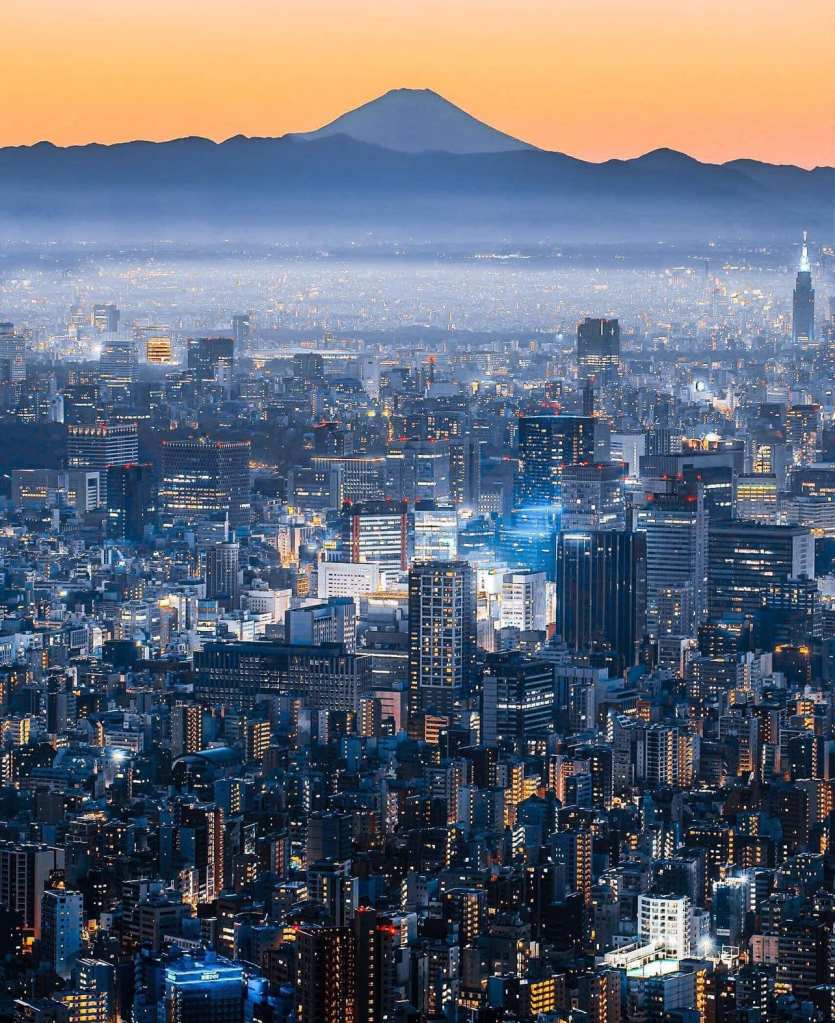
Tokyo with Mt Fuji inthe distance.

This post was written last week, when it was incredibly hot. It was too hot to continue writing so I delayed it.

_______________________________________________________

Pheeee-ew! It is hot! It’s 43ºC today, after 39º yesterday. And tomorrow it is forecast to be 42º, and 41º on Saturday, and another forty degree-er on Sunday, and another on Monday. We’ve already exceeded the record for the number of forty degree days this summer. And we’ve had above 30deg temps for more than ten days in a row, I think.

Luckily, as I’ve said before, this house is well insulated and with ducted air con, I’m hardly noticing the heat. I don’t need to turn it on until around midday, and it goes off at about 5pm because it gets too cold in my TV watching position. I don’t need it on overnight, either.

So with solar power, and the $400 grant from the state government, I don’t need to worry about the cost of running the air con either. Not much, anyway. This is all good.

_____________________________________________________

I’ve delayed continuing this post for a few days and wowee! The heat goes on. This is the hottest February I have ever known in my 77 years. We had three days of 43degC in one burst last weekend and we’ve had about eight days over 40deg in the 20 days of the month so far. It’s a cool change today, only 37deg! And there’s more to come – the highs will continue on Thurs, Friday and the weekend.

The question is, is this global heating? Is this climate change? If, by some miracle, we reversed the increase in CO2 in the atmosphere, would the temperatures go back to the mid to high thirties?

I think the answer is, probably yes, but it would take up to a century for any change to take effect, because that’s how long the increase in CO2 and hence the heating has been going on.

So the answer is, better get used to it. I absolutely do not think we will stop the increase in atmospheric CO2 (erroneously called “carbon” – carbon is black soot, CO2 is a gas!)

My house is very well insulated (sheets of fibre in the roof space) and I have ducted airconditioning. I haven’t even turned it on yet today, at 10am.

My cars are airconditioned, and the premises I visit are also airconditioned, so I’m not exposed to the heat much.

__________________________________________________________

The announcement of all those new Navy vessels today is great, but for cryin’ out loud, where are we going to get all the highly skilled construction workers to build the ships, and all the thousands of new crew members to operate them? Isn’t it clear, skills and experience are becoming so much in demand. But the company I worked for all my working life placed a low value on training.

I worked with a guy, 10 years younger than me but extremely bright, a software programmer who had the ability to easily pick up new software languages.

He wanted to do a degree at Curtin University and all he wanted from the company was to be able to arrange his shifts so that he could attend lectures at the uni during the day, that is, in work hours. He wasn’t asking for time off, just to be able to arrange his shifts to give him time to attend lectures.

The company’s answer was no, we need you here, sorry. It was unbelievable and has not been forgotten.

______________________________________________________

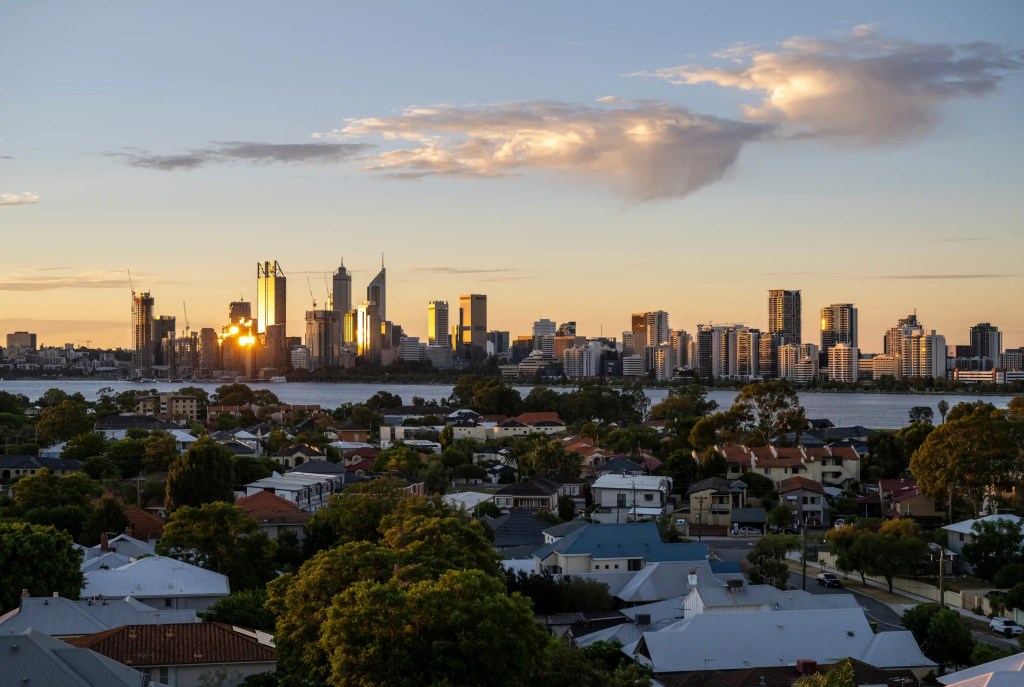
Perth skyline.